
3D Printing Materials: The Full Range, Explained
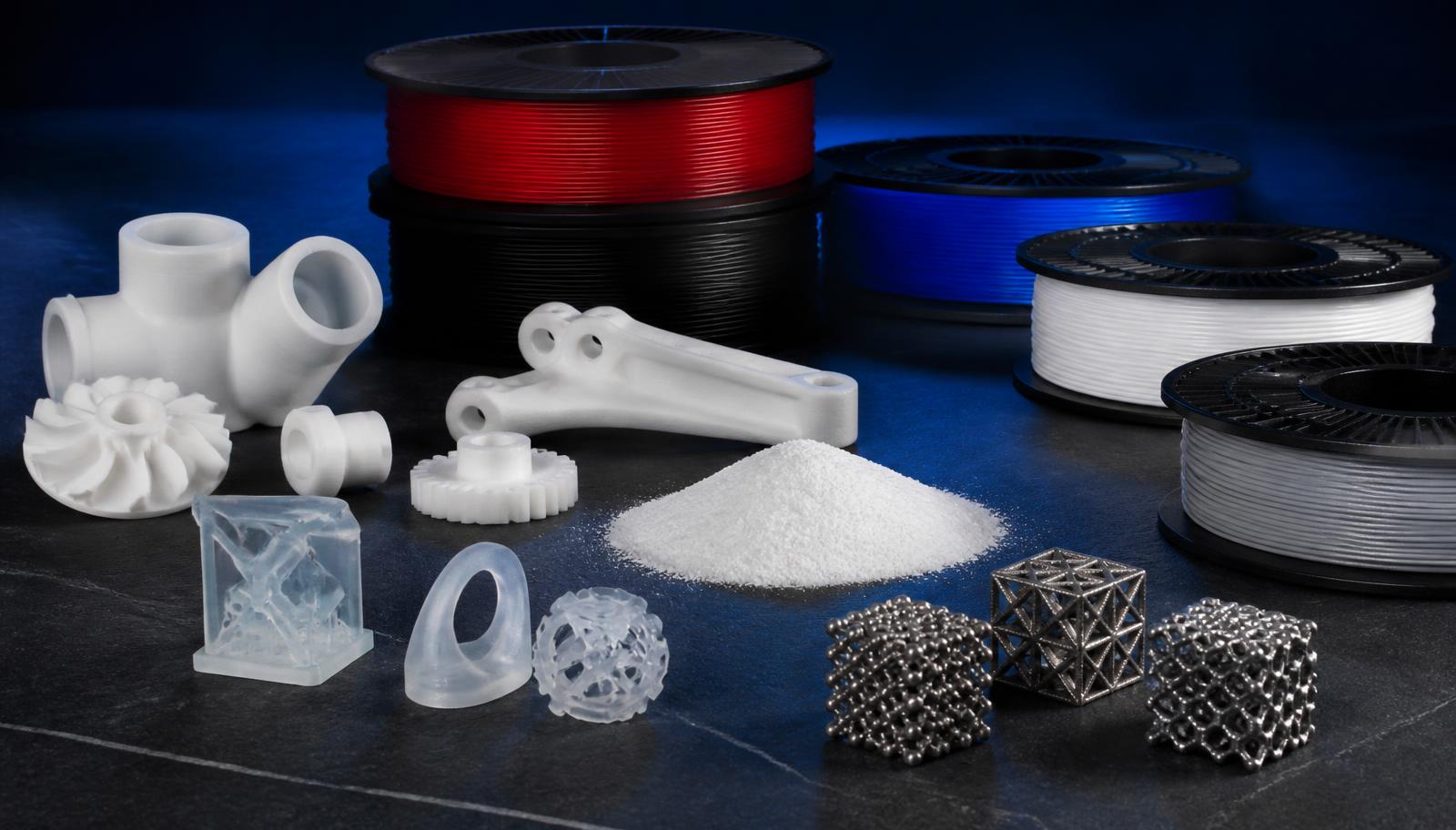
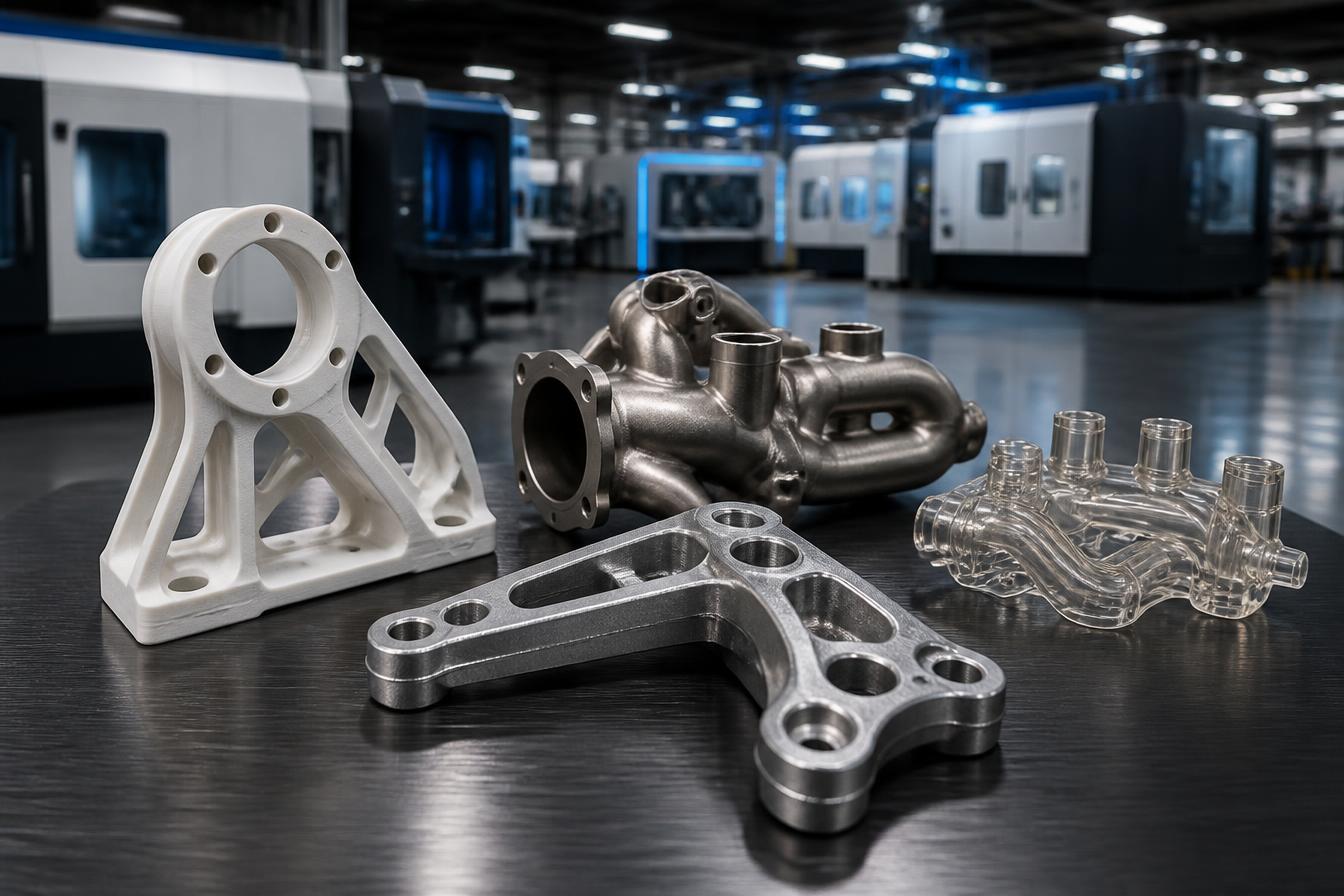
From everyday PLA to aerospace-grade titanium, Quantix 3D Printing works across the full spectrum of 3D printing materials: plastics, engineering resins, nylon powders, multi-material jetting compounds, and precious and industrial metals. Every quote includes free advice on which one is right for your part.
45+ materials · Free material guidance · No minimum order quantity · Ships Australia-wide.
What 3D Printing Materials Are Available in Australia?
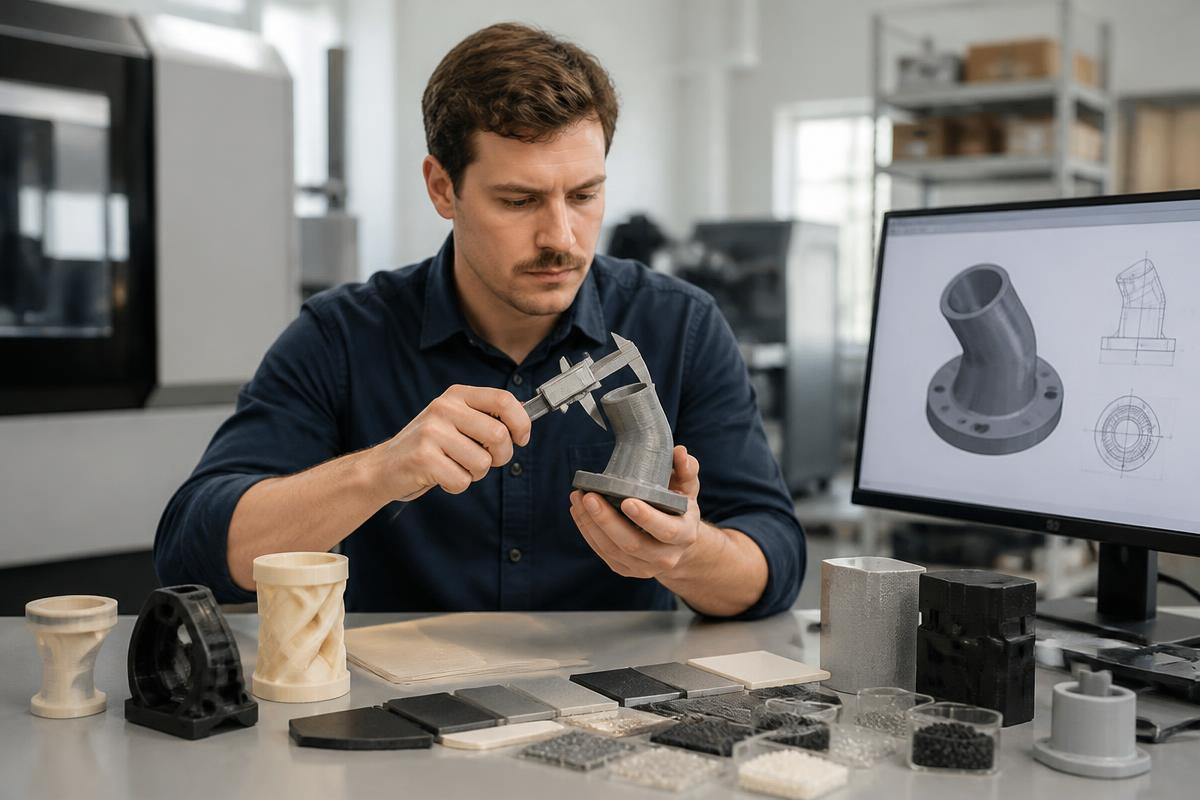
Quantix 3D Printing supplies 45+ materials spanning FDM, SLA, SLS, MJF, material jetting, PolyJet, and metal 3D printing. That includes standard and engineering-grade plastics (PLA, ABS, ASA, polycarbonate, ULTEM), nylon and composite powders, UV-cured resins and acrylics, castable wax, and precious and industrial metals (titanium, stainless steel, aluminium, nickel alloys, brass, bronze, copper, silver, platinum, gold). Every material is matched to your part by our team as part of a free quote; if something you need isn't listed below, ask when you request your quote and we'll do what we can to source it, with no minimum order quantity attached.
Decision guide
Which 3D Printing Material Should I Use?
There's no single "best" material: the right one depends on what the part has to survive. As a starting point:
Need a quick, low-cost concept model? Standard FDM plastics (PLA, ABS) are the fastest and cheapest way to hold a design in your hand.
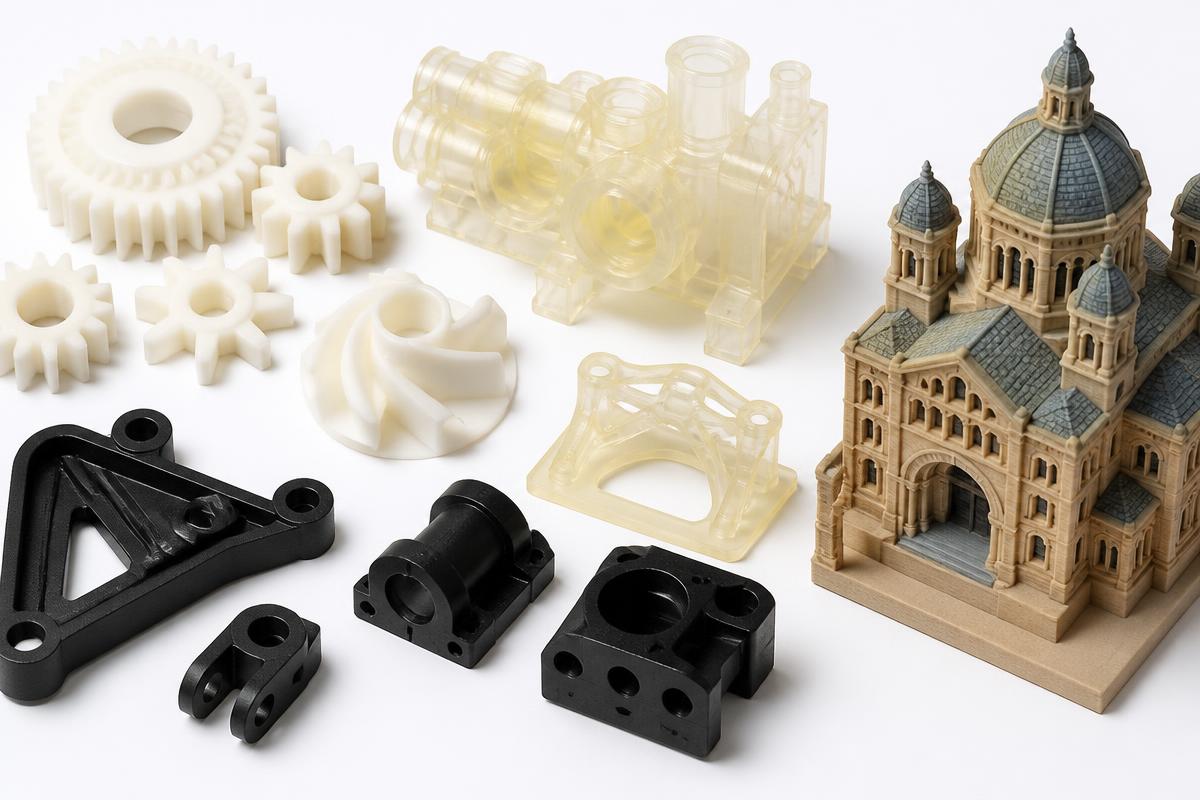
Need a smooth, presentation-ready or highly detailed part? SLA resin, PolyJet, or material jetting acrylics give the finest surface finish and detail of any process we offer.
Need a functional, load-bearing prototype or end-use part? Nylon (SLS/MJF), polycarbonate, or one of the ULTEM grades typically outperform standard FDM plastics on strength and durability.
Need UV or weather resistance for an outdoor part? ASA resists the yellowing and degradation that standard ABS suffers in sunlight.
Need extreme heat resistance? ULTEM 1010 and ULTEM 9085 hold up under sustained high heat among plastics; for the highest heat, load, or corrosion demands, metal (titanium, stainless steel, nickel alloys) is the answer.
Need a flexible, rubber-like part? Flexible SLA resin, Flexible PEBA 2301 (SLS), or Agilus30 (PolyJet) suit gaskets, seals, overmoulds, and ergonomic grips.
Need maximum stiffness-to-weight? Carbon-filled nylon or glass-filled composites add rigidity and reduce weight versus unfilled plastics.
Need a food-contact or sterilisable-grade material? ABS-M30i and ULTEM 1010 are formulated for those requirements as material grades, independent of industry.
Need full-colour or presentation models? Multicolour PolyJet reproduces colour and detail in a single print.
Still not sure? That's what the free quote process is for: upload your file and our team will recommend a material based on your part's function, environment, and budget, at no cost.
Plastic 3D Printing Materials: Full Material List by Process
(Figures below are indicative process/material specs, competitor-sourced and not yet verified against Quantix 3D Printing's own machines. See Implementation Notes.)
FDM Materials (Filament-Based)
| Material | Surface Finish | Finest Detail | Min. Wall Thickness | Max Build Size | Heat Resistance | Colours | Tolerance |
|---|---|---|---|---|---|---|---|
| PLA | Lightly textured | 1.0mm | 1.0mm | 300 × 300 × 450mm | ~70°C | Red, white, black, blue, green, orange, grey, purple, clear, pink, yellow, brown | ±0.15mm/100mm |
| ABS | Lightly textured | 1.0mm | 1.0mm | 300 × 300 × 450mm | ~70°C | Same 12-colour range as PLA | ±0.15mm/100mm |
| ABS-M30i (food/medical-contact grade) | Lightly textured | 1.0mm | 1.0mm | 914 × 609 × 914mm | ~96°C | Ivory | ±0.15mm/100mm |
| ASA (UV-stable) | Lightly textured | 1.0mm | 1.0mm | 914 × 609 × 914mm | ~98°C | White, black | ±0.15mm/100mm |
| Polycarbonate (PC) | Lightly textured | 1.0mm | 1.0mm | 914 × 609 × 914mm | ~138°C | White | ±0.15mm/100mm |
| PC-ISO (biocompatible-grade) | Lightly textured | 1.0mm | 1.0mm | 914 × 609 × 914mm | ~133°C | White | ±0.15mm/100mm |
| Nylon 6 | Lightly textured | 1.0mm | 1.0mm | 914 × 609 × 914mm | ~93°C | Black | ±0.15mm/100mm |
| Nylon 12 | Lightly textured | 1.0mm | 1.0mm | 914 × 609 × 914mm | ~97°C | Black | ±0.15mm/100mm |
| Nylon 12 CF (carbon-filled) | Lightly textured | 1.0mm | 1.0mm | 914 × 609 × 914mm | ~147°C | Black | ±0.15mm/100mm |
| ULTEM 9085 (flame-retardant grade) | Lightly textured | 1.0mm | 1.0mm | 914 × 609 × 914mm | ~153°C | Natural tan | ±0.15mm/100mm |
| ULTEM 1010 (steam-sterilisable grade) | Lightly textured | 1.0mm | 1.0mm | 914 × 609 × 914mm | ~216°C | Natural tan | ±0.15mm/100mm |
SLS Materials (Powder-Based Nylon)
| Material | Surface Finish | Finest Detail | Min. Wall Thickness | Max Build Size | Heat Resistance | Colours | Tolerance |
|---|---|---|---|---|---|---|---|
| Nylon PA2200 | Powder finish | 0.3mm | 0.7mm | 675 × 545 × 366mm | 172–180°C | White, black, grey | ±0.1mm/100mm |
| Glass-Filled Nylon PA3200 (added rigidity) | Powder finish | 0.5mm | 1.0mm | 315 × 240 × 180mm | ~176°C | White | ±0.1mm/100mm |
| Alumide (aluminium-filled nylon composite) | Powder finish | 0.5mm | 0.8mm | 315 × 240 × 190mm | 172–180°C | Grey | ±0.1mm/100mm |
| Flexible PEBA 2301 (elastomeric) | Powder finish | 0.5mm | 0.8mm | 315 × 240 × 190mm | ~150°C | White | ±0.1mm/100mm |
MJF Materials (Multi Jet Fusion Nylon)
| Material | Surface Finish | Finest Detail | Min. Wall Thickness | Max Build Size | Heat Resistance | Colours | Tolerance |
|---|---|---|---|---|---|---|---|
| HP Nylon PA12 | Powder finish | 0.1–0.2mm | 0.5mm | 380 × 284 × 380mm | ~95°C | Black, grey | ±0.1mm/100mm |
| PA11 | Powder finish | 0.1–0.2mm | 0.5mm | 380 × 284 × 380mm | ~54°C | Black | ±0.1mm/100mm |
| PA12GB (glass bead-filled, durability boost) | Powder finish | 0.1–0.2mm | 0.5mm | 380 × 284 × 380mm | ~121°C | Grey | ±0.1mm/100mm |
SLA Materials (Resin)
| Material | Surface Finish | Finest Detail | Min. Wall Thickness | Max Build Size | Heat Resistance | Colours | Tolerance |
|---|---|---|---|---|---|---|---|
| ABS Resin Plastic | Ultra-smooth | 0.2mm | 1.0mm | 1700 × 800 × 800mm | ~52°C | White | ±0.1mm/100mm |
| Transparent Resin (optical/visual prototyping) | Ultra-smooth | 0.2mm | 1.0mm | 600 × 600 × 400mm | ~60°C | Transparent | ±0.1mm/100mm |
| White Soft Resin (flexible, Shore 85A) | Ultra-smooth | 0.2mm | 1.0mm | 600 × 600 × 401mm | ~60°C | White | ±0.1mm/100mm |
| Temperature Resin (elevated heat resistance) | Ultra-smooth | 0.2mm | 1.0mm | 600 × 600 × 402mm | ~90°C | Light yellow | ±0.1mm/100mm |
MJM
| Material | Surface Finish | Finest Detail | Min. Wall Thickness | Max Build Size | Heat Resistance | Colours | Tolerance |
|---|---|---|---|---|---|---|---|
| UV-Cured Acrylic | Ultra-smooth | 0.1mm | 0.6mm | 284 × 184 × 203mm | ~80°C | Transparent | ±0.1mm/100mm |
| Frosted Acrylic | Ultra-smooth | 0.1mm | 0.6mm | 284 × 184 × 203mm | ~80°C | Transparent (frosted) | ±0.1mm/100mm |
| Transparent Acrylic | Ultra-smooth | 0.1mm | 0.6mm | 284 × 184 × 203mm | ~80°C | Transparent | ±0.1mm/100mm |
| Castable Wax (investment-casting patterns) | Ultra-smooth | 0.1mm | 0.6mm | 75 × 75 × 50mm | ~80°C | Blue, white | ±0.1mm/100mm |
PolyJet Materials
| Material | Surface Finish | Finest Detail | Min. Wall Thickness | Max Build Size | Heat Resistance | Colours | Tolerance |
|---|---|---|---|---|---|---|---|
| Basic Vero | Ultra-smooth | 0.7mm | 1.0mm | 490 × 390 × 200mm | 45–50°C | Black, white | ±0.1mm/100mm |
| VeroClear | Ultra-smooth | 0.7mm | 1.0mm | 490 × 390 × 200mm | 45–50°C | Transparent | ±0.1mm/100mm |
| RGD 450 (PP-like grade) | Ultra-smooth | 0.7mm | 1.0mm | 490 × 390 × 200mm | 46–50°C | Grey, white | ±0.1mm/100mm |
| Agilus30 (tear-resistant flexible, Shore 30A–95A) | Ultra-smooth | 0.7mm | 1.0mm | 490 × 390 × 200mm | 45–50°C | Black | ±0.1mm/100mm |
| MED610 (biocompatible-grade) | Ultra-smooth | 0.7mm | 1.0mm | 490 × 390 × 200mm | 45–50°C | Clear | ±0.1mm/100mm |
| Digital ABS Plus (high-temp with toughness) | Ultra-smooth | 0.7mm | 1.0mm | 490 × 390 × 200mm | 49–54°C | White | ±0.1mm/100mm |
| Multicolour | Ultra-smooth | 0.7mm | 1.0mm | 490 × 390 × 200mm | 49–54°C | Multiple | ±0.1mm/100mm |
| Vero Clear (High-Detail) | Ultra-smooth | 0.2mm | 1.0mm | 250 × 250 × 200mm | ~70°C | Transparent | ±0.1mm/100mm |
| Vero White (High-Detail) | Ultra-smooth | 0.2mm | 1.0mm | 250 × 250 × 200mm | ~70°C | White | ±0.1mm/100mm |
Metal 3D printing materials: full list
Metal 3D Printing Materials: SLM, DMLS & Precious Metals
| Material | Process | Surface Finish | Finest Detail | Min. Wall Thickness | Max Build Size | Heat Resistance | Colour | Tolerance |
|---|---|---|---|---|---|---|---|---|
| Stainless Steel 420 | SLM | Smooth | 0.2mm | 1.5mm | 760 × 390 × 390mm | ~830°C | Brown | ±0.2mm/100mm |
| Aluminium (AlSi10Mg) (aerospace/automotive lightweighting) | SLM | Smooth | 0.2mm | 1.5mm | 270 × 220 × 320mm | ~1276°C | Matte grey | ±0.2mm/100mm |
| Stainless Steel 316L (corrosion-resistant) | DMLS | Smooth | 0.1mm | 1.0mm | 220 × 220 × 250mm | ~1400°C | Steel | ±0.2mm/100mm |
| Titanium (aerospace, high-performance components) | DMLS | Smooth | 0.1mm | 1.0mm | 220 × 220 × 250mm | ~1600°C | Steel | ±0.2mm/100mm |
| MS1 Steel | DMLS | Smooth | 0.1mm | 1.0mm | 220 × 220 × 250mm | ~1500°C | Steel | ±0.2mm/100mm |
| Nickel Alloy IN625 (high-heat, corrosion-resistant) | DMLS | Smooth | 0.1mm | 1.0mm | 220 × 220 × 250mm | ~1500°C | Steel | ±0.2mm/100mm |
| Nickel Alloy IN718 | DMLS | Smooth | 0.1mm | 1.0mm | 220 × 220 × 250mm | ~1500°C | Steel | ±0.2mm/100mm |
| Cobalt Chrome | DMLS | Smooth | 0.1mm | 1.0mm | 220 × 220 × 250mm | ~1500°C | Steel | ±0.2mm/100mm |
| Matt Black Gold Nickel Steel | SLM | Smooth | 0.2mm | 1.5mm | 760 × 390 × 390mm | ~830°C | Matt black-gold, brown | N/A |
| Brass (precious metal) | SLM | Ultra-smooth | 0.1mm | 0.8mm | 89 × 89 × 100mm | ~800°C | Brass | ±0.2mm/100mm |
| Bronze (precious metal) | SLM | Ultra-smooth | 0.1mm | 0.8mm | 89 × 89 × 100mm | ~800°C | Bronze | ±0.1mm/100mm |
| Copper (precious metal) | SLM | Ultra-smooth | 0.1mm | 0.8mm | 89 × 89 × 100mm | ~800°C | Copper | N/A |
| Silver (precious metal) | SLM | Ultra-smooth | 0.1mm | 0.8mm | 89 × 89 × 100mm | ~800°C | Silver | ±0.2mm/100mm |
| Platinum (precious metal) | SLM | Ultra-smooth | 0.1mm | 0.8mm | 89 × 89 × 100mm | ~800°C | Platinum | N/A |
| Gold 14K (precious metal) | SLM | Ultra-smooth | 0.1mm | 0.8mm | 89 × 89 × 100mm | ~800°C | Gold | ±0.2mm/100mm |
| Gold 18K (precious metal) | SLM | Ultra-smooth | 0.1mm | 0.8mm | 89 × 89 × 100mm | ~800°C | Gold | N/A |
Quick material comparison
3D Printing Material Comparison at a Glance
(A shortlist for fast decisions; the full spec tables above cover every material in detail.)
| Material | Process | Standout Property | Typical Best Use |
|---|---|---|---|
| PLA | FDM | Low cost, easy detail | Concept models, low-load prototypes |
| ABS | FDM | Impact resistance | Functional prototypes, enclosures |
| ASA | FDM | UV / weather resistance | Outdoor and automotive-adjacent parts |
| ULTEM 9085 / 1010 | FDM | Extreme heat resistance, flame-retardant / sterilisable | High-temperature, high-performance components |
| Transparent / Standard Resin | SLA | Ultra-smooth finish | Visual & presentation models |
| White Soft Resin | SLA | Rubber-like flexibility | Gaskets, seals, overmoulds |
| Nylon PA2200 / PA12 | SLS / MJF | Strength without supports | End-use functional parts |
| Nylon 12 CF / Alumide | FDM / SLS | Stiffness-to-weight | Structural jigs & fixtures |
| Titanium | DMLS | Strength-to-weight, corrosion resistance | Aerospace, defence, precision engineering |
| Stainless Steel 316L | DMLS | Durability, corrosion resistance | Industrial, structural components |
| Aluminium (AlSi10Mg) | SLM | Lightweight strength | Aerospace & automotive lightweighting |
| Gold / Silver / Platinum / Brass / Bronze / Copper | SLM | Fine detail in precious/decorative metal | Jewellery, decorative and bespoke components |
Not sure which row fits your part?
Get a Free QuoteWhy material choice matters
Get the Material Right the First Time
Get the material wrong and it shows up later: a part that warps under heat, snaps under load, or turns brittle outdoors after a few weeks in the sun isn't a printing fault. It's a material-selection fault, and one of the costliest mistakes to catch late in product development. That's why every Quantix 3D Printing quote includes:
Free material guidance: our team reviews your part's function and environment and recommends a material, not just a process.
45+ materials on hand: plastics, engineering resins, nylon, composites, and precious and industrial metals, so the material is matched to the part rather than limited to whatever's in stock.
No minimum order quantity: test a material on a single prototype before committing to a production run.
Free design-for-manufacture (DFM) feedback: flagging wall thickness, tolerances, and geometry issues specific to your chosen material before printing.
Australia-wide shipping: the same material range and advice whether you're in a capital city or regional Australia.
Materials Matched to Your Industry
- Manufacturing
- Engineering
- Automotive
- Aerospace & Defence
- Mining & Resources
- Robotics & Electronics
- Architecture & Design
- Education & Research
- Transport & Logistics
Whatever you're building, material selection changes with the industry: titanium 3D printing for aerospace-grade strength-to-weight, ASA for parts that live outdoors, carbon-fibre nylon for lightweight structural brackets, or stainless steel for parts that need to shrug off corrosion. Not sure what your industry typically specifies? Ask when you request your free quote and we'll point you in the right direction.
Material pricing request
Request Pricing by Material & Process
Tell us the material and process you're considering and we'll come back with a free quote, a free material recommendation, and free design-for-manufacture feedback. No minimum order quantity, no lock-in contract, strictly confidential.
- 45+ materials across plastics, resins, nylon, composites and metals
- Not sure which material? Choose “Recommend a material” and we'll advise
- Shipped anywhere in Australia
3D Printing Materials: Frequently Asked Questions
What 3D printing materials do you offer?
We work with 45+ materials across FDM, SLA, SLS, MJF, material jetting, PolyJet, and metal 3D printing, including PLA, ABS, ASA, polycarbonate and ULTEM plastics; standard, tough, flexible and high-temperature resins; nylon and carbon/glass-filled composites; castable wax; and metals from titanium and stainless steel through to brass, bronze, copper, silver, platinum and gold.
What is the best 3D printing material for prototypes?
It depends on the prototype's purpose. For a quick concept model, PLA or ABS (FDM) is fastest and most affordable. For a detail-critical, presentation-ready prototype, SLA resin or PolyJet gives the smoothest finish. For a functional prototype that needs to be tested under real-world load, nylon (SLS/MJF), polycarbonate, or an ULTEM grade typically performs better.
What is the strongest 3D printing material?
Among plastics, carbon-filled nylon, ULTEM 9085/1010, and polycarbonate offer the highest strength and heat resistance. For maximum strength, stiffness, and load-bearing capability, metal materials (titanium, stainless steel, and nickel alloys) outperform any plastic.
What is the most heat-resistant 3D printing material?
Among our plastics, ULTEM 1010 offers the highest heat resistance (rated to roughly 216°C), followed by ULTEM 9085 and polycarbonate. For sustained extreme heat, metal 3D printing materials (titanium, stainless steel, nickel alloys) offer significantly greater heat tolerance than any plastic or resin.
What's the difference between FDM, SLA and SLS materials?
FDM materials (PLA, ABS, ASA, PC, ULTEM) are filament-based, affordable, and best for functional prototypes and low-cost parts. SLA materials are liquid resins cured into ultra-smooth, high-detail parts, best for visual models and detail-critical prototypes. SLS materials are nylon powders fused into strong, functional parts without needing support structures, suited to complex geometries and end-use components.
Can you 3D print in metal?
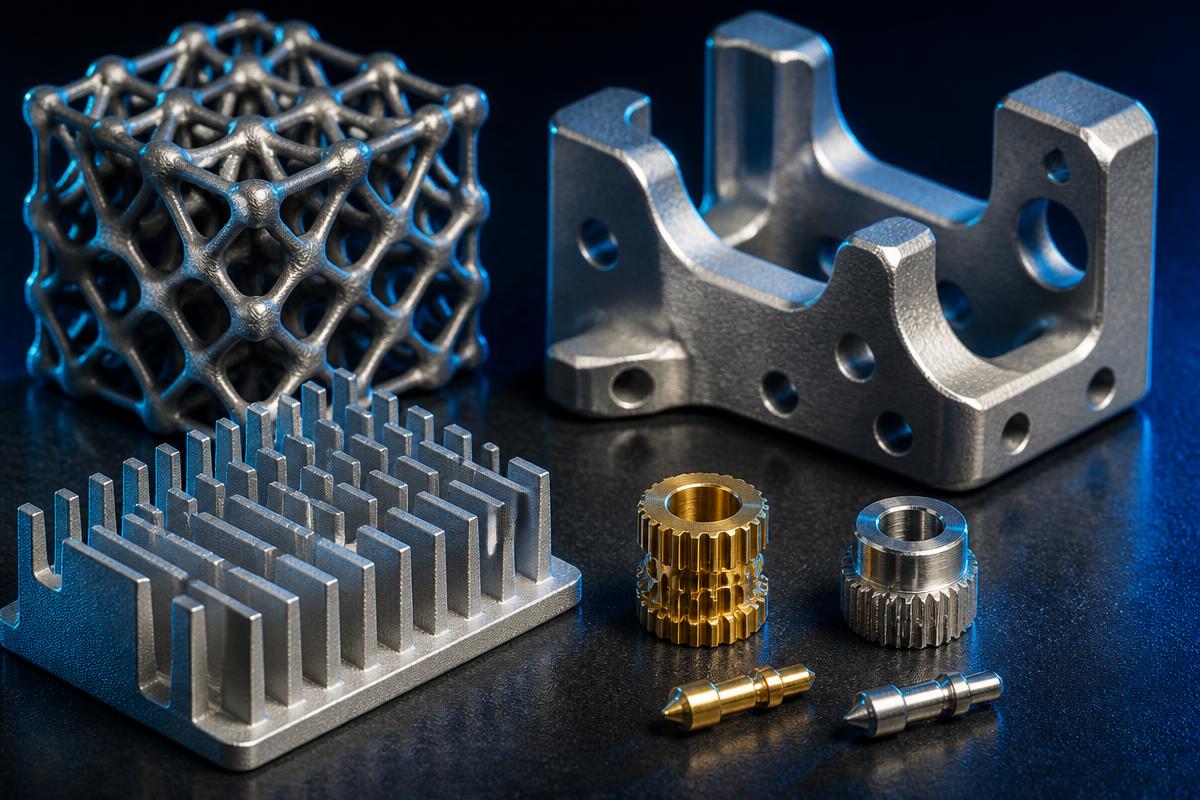
Yes. We offer metal 3D printing (SLM/DMLS) in titanium, stainless steel, aluminium, nickel alloys, cobalt chrome, and precious metals including brass, bronze, copper, silver, platinum and gold, suited to aerospace, defence, automotive, precision engineering, and decorative or bespoke applications.
What material should I use for outdoor or UV-exposed parts?
ASA is purpose-built for outdoor and UV-exposed applications, resisting the yellowing and degradation that standard ABS experiences over time in sunlight.
Do you offer flexible or rubber-like 3D printing materials?
Yes. Flexible SLA resin, Flexible PEBA 2301 (SLS), and Agilus30 (PolyJet) are all suited to gaskets, seals, overmoulds, and ergonomic grips that need to bend without cracking.
Can you print full-colour models?
Yes. Multicolour PolyJet reproduces colour and fine detail in a single print.
How do I know which material is right for my part?
Upload your file for a free quote and our team will recommend the right material based on your part's function, environment, mechanical requirements, and budget. No material expertise is required on your end.
Do you have a minimum order for a specific material?
No. Quantix 3D Printing has no minimum order quantity, so you can test a material on a single prototype before committing to a production run.
Is my material and design information kept confidential?
Yes. All files and project details you share with us are kept strictly confidential.
Get Free Material Advice With Your Quote
Not sure which of our 45+ materials fits your part? Upload your file and get a free quote, free material recommendation, and free design-for-manufacture feedback, with no minimum order, no lock-in contract, and shipping Australia-wide.