
Biocompatible-Grade FDM Polycarbonate
PC-ISO 3D Printing Service Australia: Heat-Resistant, Biocompatible-Grade Polycarbonate
Strong, stiff, biocompatible-grade polycarbonate, printed to order and shipped anywhere in Australia.
Quantix 3D Printing prints PC-ISO on large-format FDM, with free design feedback on every file.
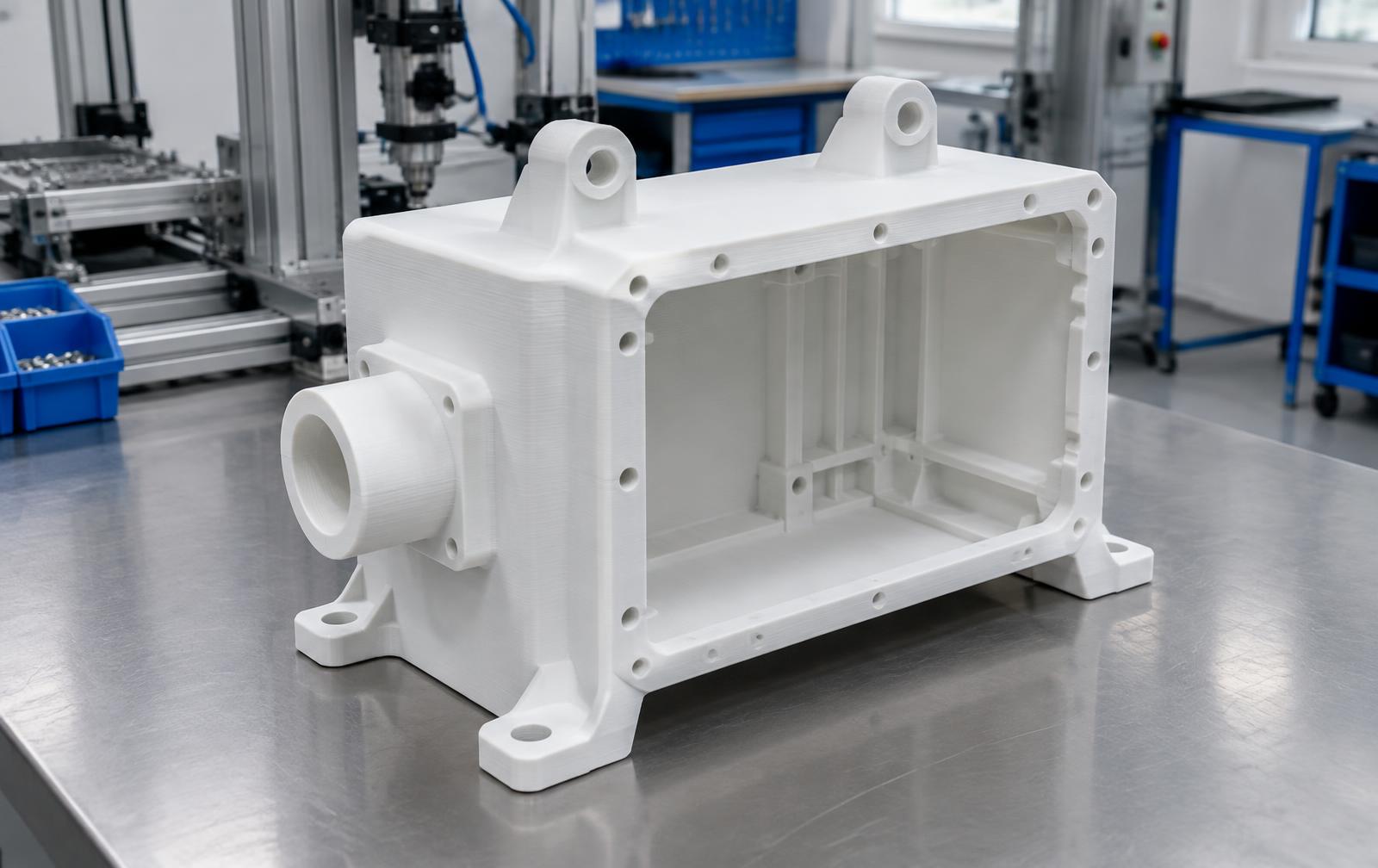
133°C
Heat deflection temperature at 0.46 MPa
57 MPa
Tensile strength
914 × 609 × 914 mm
Maximum single-piece build
No MOQ
One prototype or a production batch
Material values are typical manufacturer figures and vary with build conditions, part geometry and orientation.
What Is PC-ISO?
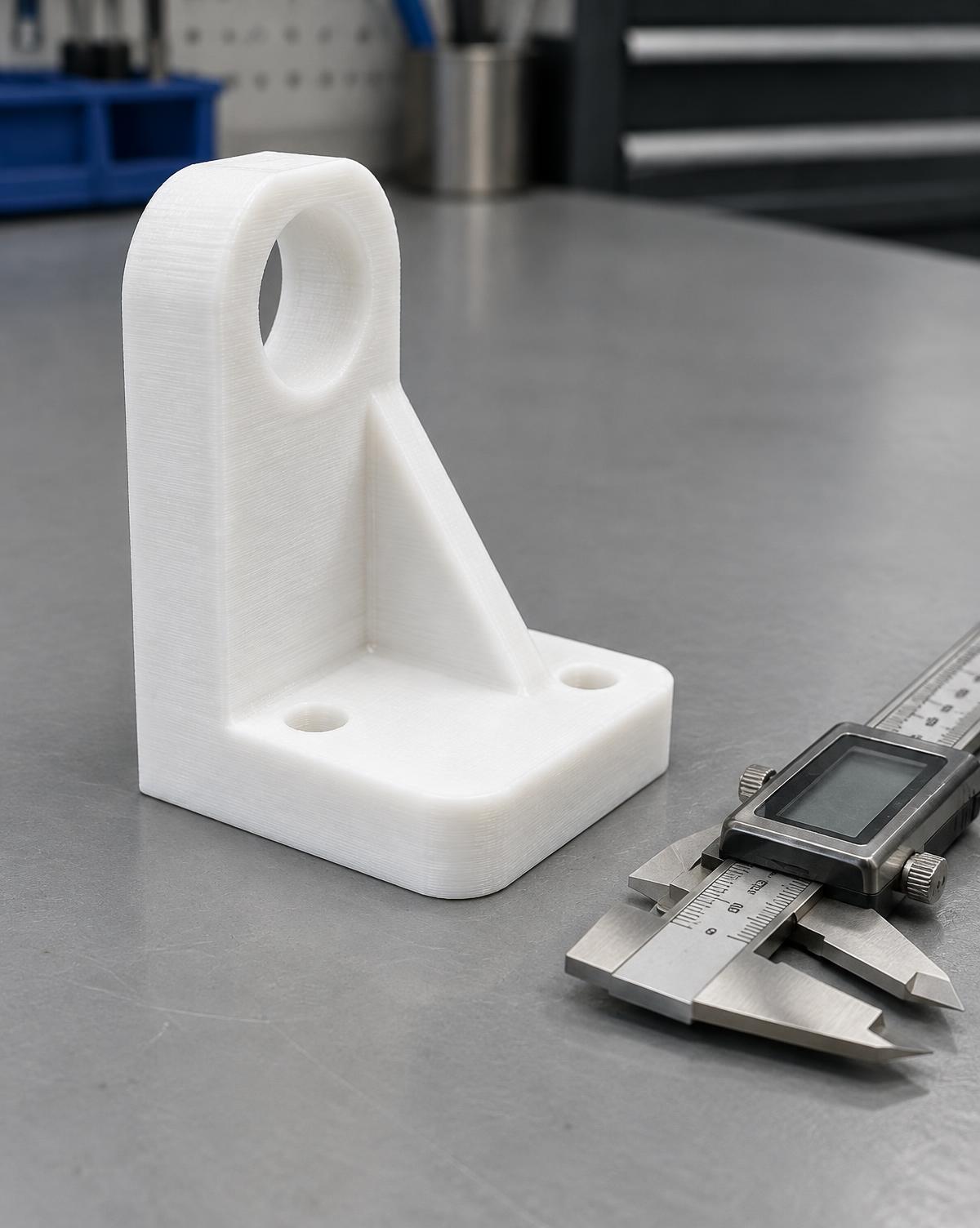
PC-ISO is a polycarbonate FDM material. In its raw state it has been tested to the ISO 10993 and USP Class VI biocompatibility standards.
Quantix 3D Printing offers PC-ISO 3D printing as part of its 11-material FDM range.
Why engineers choose it:
- Strength and stiffness: 57 MPa tensile strength, 90 MPa flexural strength and a tensile modulus of 2,000 MPa.
PC-ISO material properties and print specifications
Quantix 3D Printing makes every one of its PC-ISO 3D printed parts to the specifications below. Material properties are typical values published by the material manufacturer, and they vary with build conditions, geometry and orientation.
Print specifications
| Specification | Value |
|---|---|
| Process | FDM (fused deposition modelling) |
| Maximum build size | 914 × 609 × 914 mm, single piece |
| Minimum wall thickness | 1.0 mm |
| Finest detail | 1.0 mm |
| Tolerance | ±0.15 mm per 100 mm |
| Surface finish | Lightly textured, with visible layer lines |
| Colour | White |
| Supports | Removed before dispatch |
Typical material properties
| Property | Value | Test method |
|---|---|---|
| Tensile strength | 57 MPa | ASTM D638 |
| Tensile modulus | 2,000 MPa | ASTM D638 |
| Flexural strength | 90 MPa | ASTM D790 |
| Flexural modulus | 2,100 MPa | ASTM D790 |
| Notched Izod impact | 86 J/m | ASTM D256 |
| Elongation at break | 4% | ASTM D638 |
| Heat deflection temperature | 133°C at 0.46 MPa, 127°C at 1.81 MPa | ASTM D648 |
| Glass transition temperature | 161°C | DMA |
| Density | 1.20 g/cm³ | ASTM D792 |
FDM parts are strongest along the printed layers.
PC-ISO vs ABS, ASA and Nylon 12: which FDM material fits?
On typical manufacturer datasheet figures, PC-ISO has the highest tensile strength and heat deflection temperature of the four materials compared.
| Material | Tensile strength | Heat deflection (0.46 MPa) | Best for |
|---|---|---|---|
| PC-ISO | 57 MPa | 133°C | Heat-resistant, stiff parts that need a biocompatible-grade material |
| Nylon 12 | 46 MPa | 98°C | Chemical-resistant, tough functional parts |
| ASA | 33 MPa | 97°C | Outdoor and UV-exposed parts |
| ABS | 32 MPa | 96°C | General-purpose functional parts |
Choose PC-ISO when:
- the part sees sustained heat: keep the working temperature well below the 133°C deflection figure, and tell us the load so we can check the margin
- you need stiffness and tensile strength from an FDM part
- the part needs a manufacturer-tested, biocompatible-grade raw material
Choose another material when:
- the part has to flex or absorb repeated impact: Nylon 12 typically suits that better, because PC-ISO stretches only 4% before breaking
- the part lives outdoors in direct sun: polycarbonate yellows and weakens under long UV exposure, so ASA suits that better
What is PC-ISO used for?
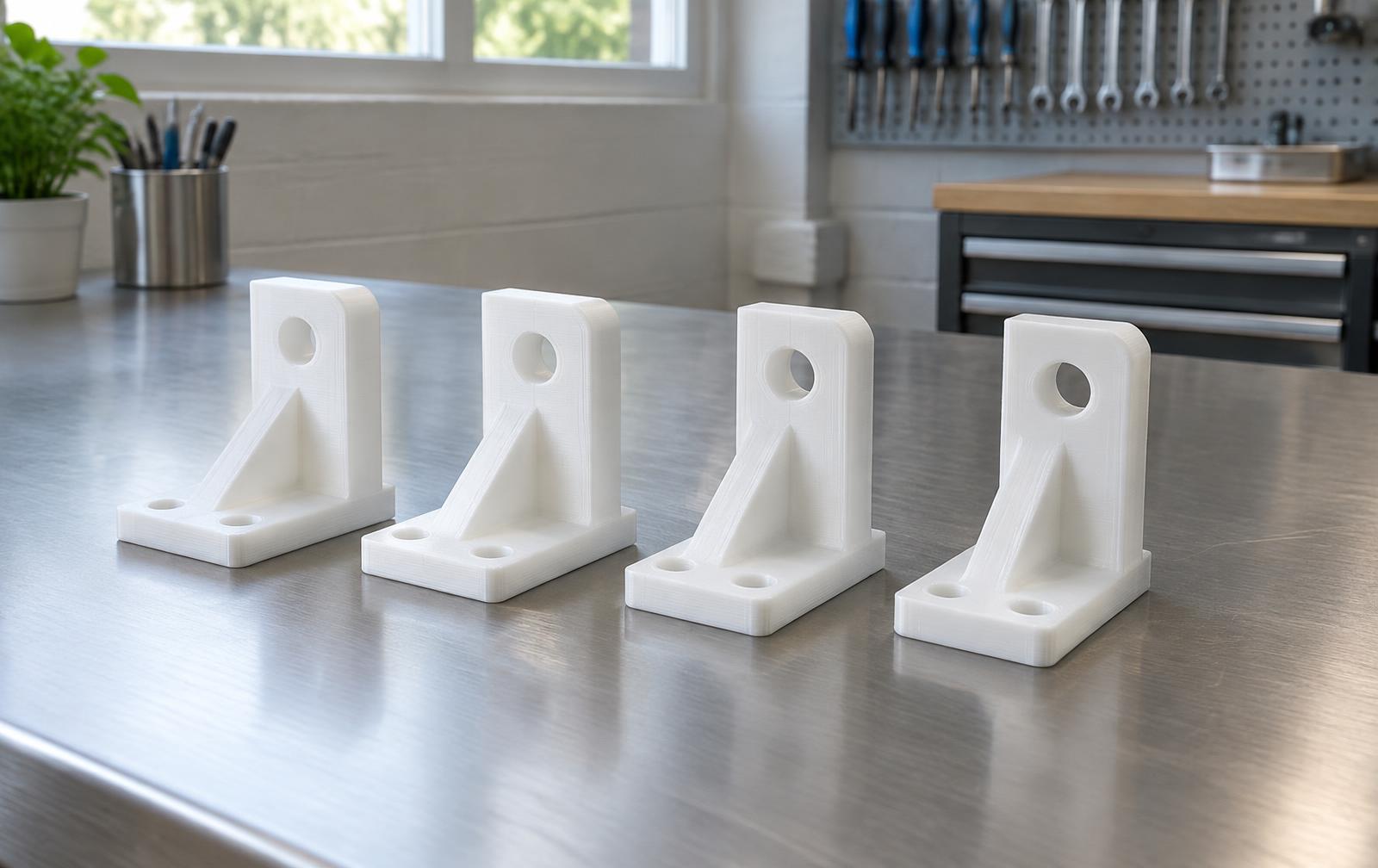
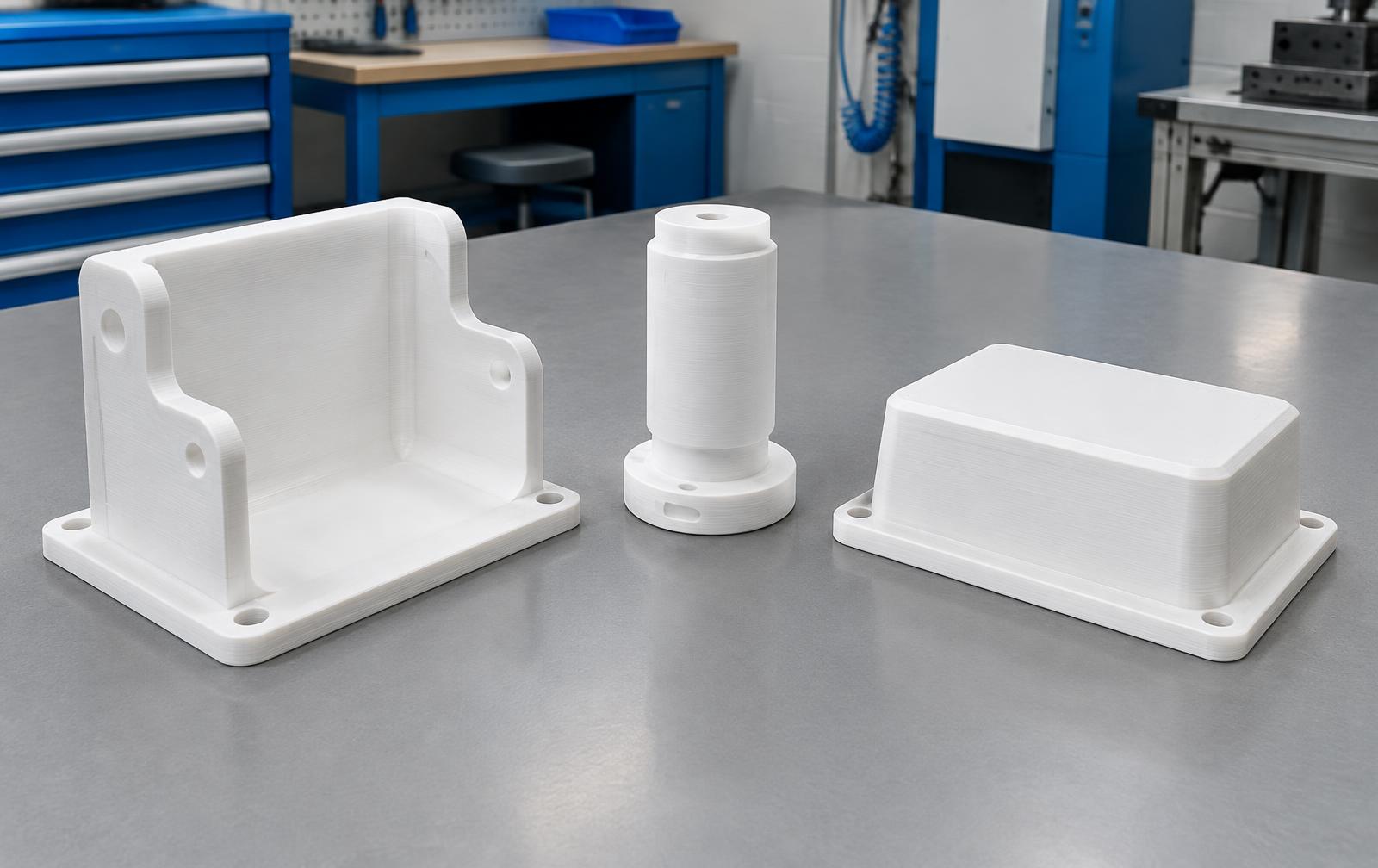
PC-ISO suits parts that need heat resistance and stiffness, and jobs where a manufacturer-tested material is preferred.
- Jigs and fixtures: heat-resistant, stiff fixtures for your production line, printed without tooling and redesigned whenever your process changes.
- Tooling and manufacturing aids: guides, gauges, patterns and aids used around your production process.
- Food and beverage and packaging equipment: guides, fixtures and tooling used around food and packaging lines.
- Housings and covers: heat-resistant covers and housings for equipment and electronics.
- Functional prototypes: test form, fit and heat performance in the material you intend to use.
- Low-volume and replacement parts: reproduce an out-of-production component from a scan or CAD file, as a single part or a batch.
Teams in manufacturing, engineering, automotive, food and beverage equipment, robotics and electronics, and education and research can all specify PC-ISO.
Design tips for PC-ISO parts
- Keep walls at 1.0 mm or thicker and features at 1.0 mm or larger.
- Add fillets to internal corners: with 4% elongation at break, sharp corners concentrate stress.
- Orient for load: tell us how the part will be loaded and we will recommend a print orientation.
- Plan for layer lines: surfaces are lightly textured, and finishing options depend on how the part will be used.
What biocompatible-grade means for your part
Quantix 3D Printing offers PC-ISO as a biocompatible-grade material through its biocompatible 3D printing service Australia-wide. It helps to be clear about what that does and does not cover.
- The raw material: the manufacturer states that PC-ISO is biocompatible per ISO 10993 and USP Class VI in its raw state. That is a statement about the material as supplied.
- The finished part: printing, support removal, handling, finishing and joining can all affect a part. A finished part is not certified for any use simply because it was printed in this material.
- Coatings and additions: primer, paint, clear coat and adhesive fall outside the manufacturer's testing, so a coated part should not be treated as biocompatible.
- Your responsibility: you remain responsible for confirming that the material, the finished part and any finishing suit your application and any regulations that apply to it.
- Documents: ask us for the manufacturer datasheet when you request your quote.
- Sterilisation: sterilisation is not part of a print order. If your parts need it, tell us when you request your quote so we can discuss it.
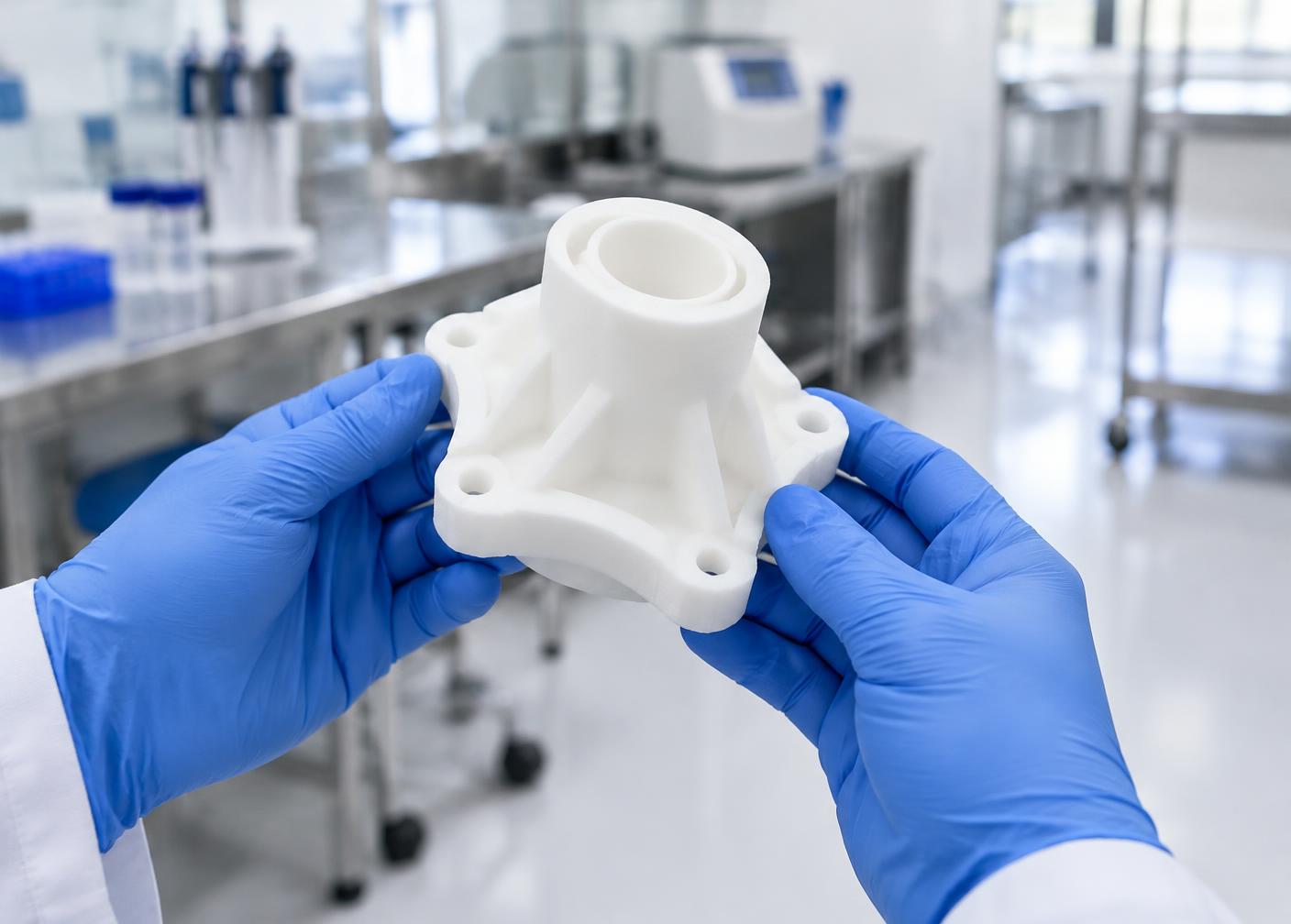
PC-ISO FDM 3D printing Australia: turnaround and delivery
Upload a CAD file, get a free quote and have finished parts delivered to your door, wherever your business is based.
- 01Upload your file: STL, STEP, IGES and most common CAD formats. No account or phone call required.
- 02Free review: our team checks wall thickness, orientation and geometry, and tells you honestly whether PC-ISO is the right material.
- 03One quote: material, quantity and turnaround are confirmed up front.
- 04We print and ship: parts are quality-checked and sent anywhere in Australia.
Delivery: Quantix 3D Printing ships to every state and territory, including Sydney, Melbourne, Brisbane, Perth, Adelaide, Canberra, Hobart and Darwin.
- No minimum order quantity
- Purchase orders accepted
- Strictly confidential, with NDAs available on request for ongoing accounts
Get a Free PC-ISO Quote
White
STL, STEP, IGES
No minimum order
Confidential
Engineer file check
PC-ISO frequently asked questions
What is PC-ISO?
PC-ISO is a polycarbonate FDM material. Its raw material has been tested to the ISO 10993 and USP Class VI biocompatibility standards, and it combines high tensile strength with a heat deflection temperature of 133°C.
Is PC-ISO biocompatible?
The manufacturer states that PC-ISO is biocompatible per ISO 10993 and USP Class VI in its raw state. That applies to the material as supplied, and not automatically to a finished part. Coatings and other additions fall outside that testing, so confirm suitability for your own application.
What does the ISO in PC-ISO mean?
It refers to the ISO 10993 biocompatibility standards the raw material was tested to. It does not describe any certification held by Quantix 3D Printing.
Can PC-ISO be sterilised?
The manufacturer states that the material can be sterilised by gamma radiation or ethylene oxide (EtO). Sterilisation is not part of a print order, so tell us when you request your quote if your parts need it.
How heat resistant is PC-ISO?
Heat deflection temperature is 133°C at 0.46 MPa and 127°C at 1.81 MPa, higher than ABS, ASA and Nylon 12 under the same test. It is not a working limit, so allow a margin below it for parts under load.
What is the largest PC-ISO part you can print?
Up to 914 × 609 × 914 mm in a single piece. Larger parts can be split into sections, and our team will advise how that suits your application.
How does PC-ISO compare with ABS?
ABS is a general-purpose FDM material for parts that do not run hot. PC-ISO is stronger and holds its shape at higher temperatures. Tell us what the part has to do and we will recommend a material as part of your free quote.
Can PC-ISO parts be painted or coated?
Finishing options such as sanding or painting depend on the material and the part. A painted or coated part should no longer be treated as biocompatible, so tell us the end use when you request a quote.
Is PC-ISO food safe?
The manufacturer lists food packaging among typical applications, but a material listing is not a food-contact approval for your part. Layer lines, finishing and your own application all matter, so confirm suitability for direct food contact through your own compliance process before use.
How much does PC-ISO 3D printing cost?
Cost depends on part volume and size, wall thickness and infill, finishing and quantity. Engineering plastics such as polycarbonate typically cost more per gram and print slower than standard plastics like PLA or ABS. Upload your file for a free quote.
Is there a minimum order for PC-ISO parts?
No. Quantix 3D Printing has no minimum order quantity, so a single prototype and a production batch are quoted the same way.
Do you ship PC-ISO parts across Australia?
Yes. Parts ship to every state and territory.
Planning a budget? See our guide to 3D printing costs in Australia →
Get a Free PC-ISO Quote
Upload your file for a free quote and honest advice on whether PC-ISO is the right material for your part. There is no lock-in contract.