MJF 3D Printing Australia
1 part or 500, built to the same spec every time. MJF (Multi Jet Fusion) fuses engineering powder (nylon, polypropylene or a flexible elastomer) across an entire layer at once, producing strong, consistent, functional parts fast enough to cover a production run, not just a single prototype. Quoted online, shipped anywhere in Australia. No tooling. No minimum order. Priced today.
Technical Capabilities
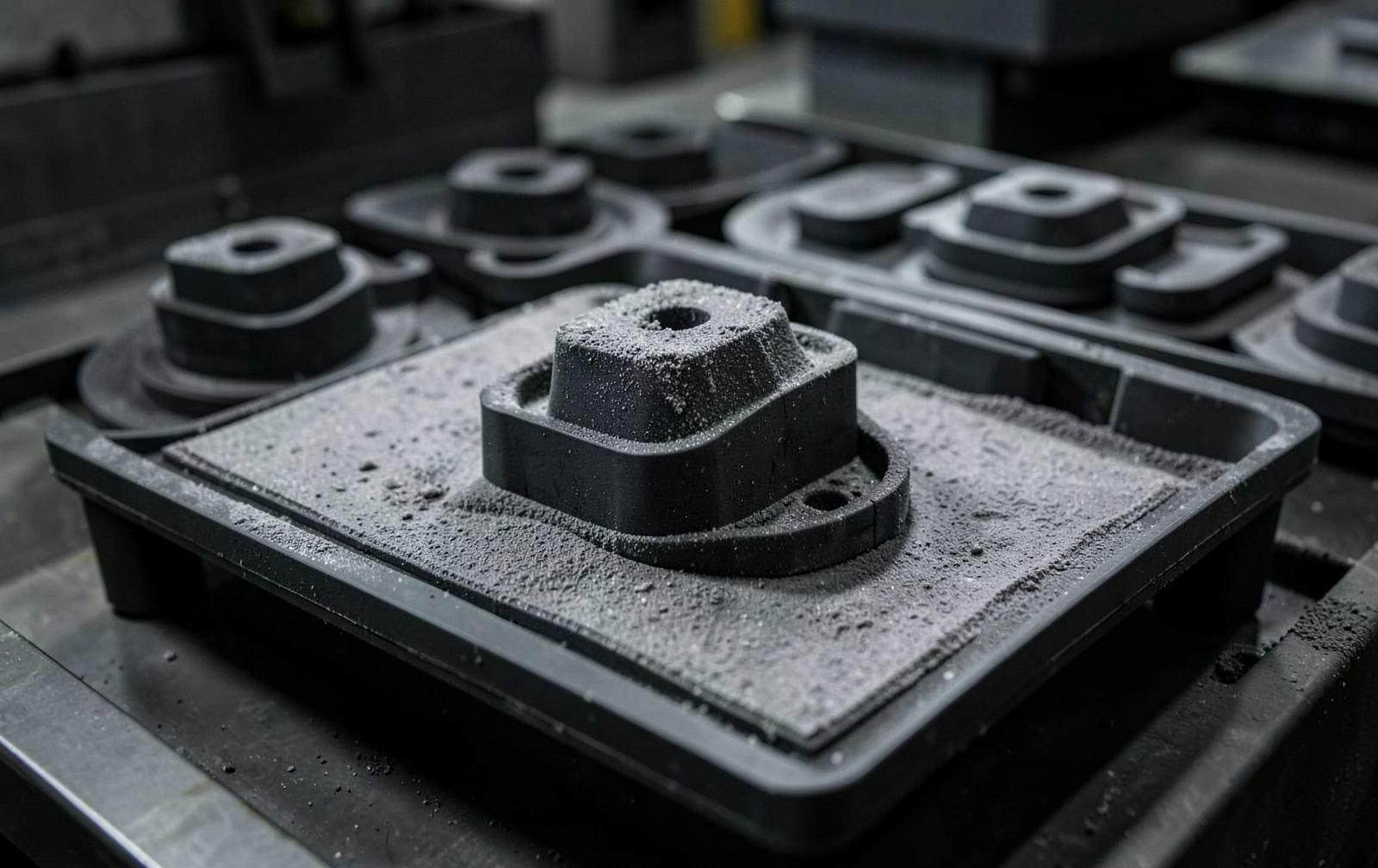
MJF 3D Printing Australia: At a Glance
Process
MJF
fusing agent jetted across the whole layer, set with an infrared pass
Max build envelope
380 × 284 × 380mm
across all 7 MJF materials
Tolerance
±0.1mm
per 100mm
Layer thickness
80µm
typical
Finest detail
0.1–0.2mm
achievable edge and surface resolution
Surface finish (as-built)
Matte powder
vapour smoothable, dyeable or paintable
Support structures
None required
unfused powder supports every layer
Typical turnaround
5–6 days
working days
Quantix 3D Printing delivers the Multi Jet Fusion Australia manufacturers and product teams rely on for repeatable output, running MJF 3D printing service jobs across 7 materials, from rigid and glass bead-filled nylon through to polypropylene and flexible elastomer grades, quoted online and shipped Australia-wide. Weighing it up against SLS, our other powder-bed process? See MJF vs SLS on our plastic 3D printing service →
What Makes Our MJF 3D Printing Different
Ordering the same part 50 times only pays off if all 50 come out the same. That's the standard we hold every MJF nylon 3D printing Australia job to, not a line item we mention once and move past:
Isotropic strength, not just isotropic marketing:
because the whole layer fuses at once, mechanical properties stay close to uniform in every direction, so a part performs about as well loaded across its layers as along them.
Built to repeat:
the same file, printed the 10th time or the 100th, holds to the same tolerance and the same mechanical spec, which is the entire point of choosing MJF over a slower, laser-based process for a production run.
7 materials, not just one nylon:
PA12 and PA12S for general-purpose functional parts, PA11 for extra toughness and impact resistance, PA12GB (glass bead-filled) for added stiffness without the weight of metal, PP for chemical resistance and fatigue life, and TPU or TPA where the part needs to flex rather than stay rigid.
Genuinely fast at scale:
a whole-layer fusing pass beats a point-by-point laser trace on throughput once quantity climbs, which is why per-unit cost drops faster on MJF than on any other plastic process we run.
A manufacturability check before anything prints:
wall thickness, powder-escape holes for hollow parts and material fit reviewed by an engineer, not discovered after the part's already built.
Up to 380 × 284 × 380mm, held to ±0.1mm/100mm:
a real build envelope and tolerance, not a vague size claim, so you know what fits and how tight it holds before you send a file. Full spec breakdown below.
Custom jobs welcome:
a single functional prototype or a full production run, quoted and handled identically, no minimum order quantity.
5–6 working days on most jobs:
exact timing depends on part size, geometry and quantity, confirmed at quote stage.
National, not city-bound:
quoted and shipped to every state and territory, with the same material access and process regardless of where you're based.
Private by default:
files and project details stay confidential, with standard purchase-order terms and no lock-in contract.
What Is MJF 3D Printing?
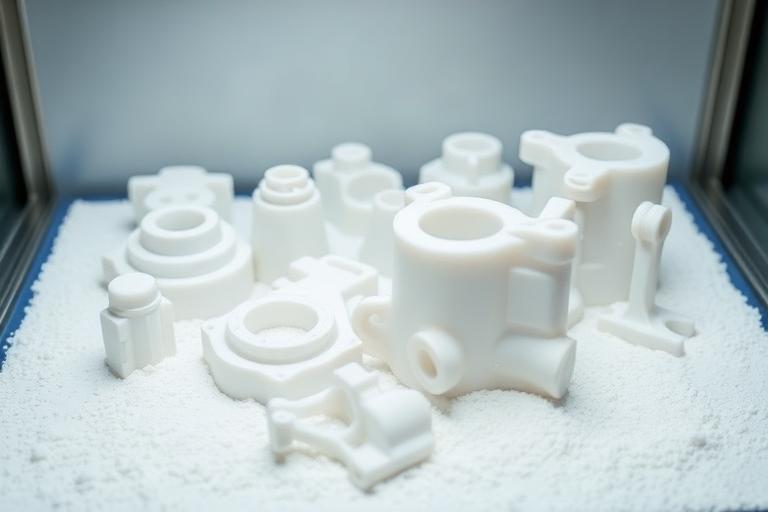
MJF (Multi Jet Fusion) is a plastic additive manufacturing process, developed by HP, that builds functional parts directly from a CAD file: a carriage sweeps a fusing agent across an entire layer of engineering powder in 1 pass, a detailing agent marks the part's edges for a sharper, more accurate outline, and an infrared lamp fuses the layer in seconds. Because the whole layer fuses at once rather than being traced point by point, MJF prints faster than laser-based powder processes at production scale and produces parts with genuinely isotropic mechanical properties, meaning the part is roughly as strong along its layer lines as it is across them, a real point of difference from processes where strength varies by build direction.
How Multi Jet Fusion Works
- 1
A thin layer of engineering powder
rolls out across the build platform inside a heated print zone.
- 2
A carriage passes once across the full layer,
jetting a fusing agent everywhere the part needs to be solid, and a detailing agent along the part's outline to sharpen edges and refine wall thickness.
- 3
An infrared lamp sweeps over the layer,
and the fusing agent absorbs the heat, melting the powder beneath it into a solid cross-section in a single pass, rather than a laser tracing each outline point by point.
- 4
The platform drops slightly,
a new layer of powder spreads on top, and the cycle repeats, with the unfused powder around every part supporting it the entire time.
- 5
The build cools inside the machine, then parts are excavated
from the powder bed and cleaned, with no support structures to cut away, because the powder itself did that job.
That single-pass, whole-layer fusing step is the real reason MJF earns a build of its own rather than a shared explanation with SLS: fusing an entire layer at once, instead of tracing every point with a laser, is what lets MJF hold pace with a genuine production run rather than just a one-off part.
Who Actually Uses MJF 3D Printing
MJF earns its keep at a specific point in a project: past the single concept model, but before a production volume big enough to justify injection-moulding tooling. That gap covers more of Australian manufacturing than most people expect:
Product teams validating a design at real volume:
10, 50 or 200+ identical enclosures or brackets, tested under the same conditions the finished product will actually see, before committing to a mould.
Engineers who need every unit to behave the same way:
a jig, fixture or test rig that gets used daily has to hold its tolerance on unit 1 and unit 30, and MJF's part-to-part consistency is built for exactly that.
Procurement teams comparing 3D printing against tooling:
injection moulding still wins at high volume, but the tooling itself typically costs thousands of dollars and weeks of lead time before a single part exists. MJF skips tooling entirely, which makes it the more economical route while volume, or the design itself, is still settling.
Manufacturers covering demand while a mould is being cut:
MJF supplies real, functional parts during the gap between “the design is locked” and “the tooling is finally ready” (known in the industry as bridge production), so a product launch doesn't have to wait on it.
Anyone replacing a batch of obsolete or hard-to-source parts:
suited to orders too small for a supplier to tool up for, but too large to justify printing 1 at a time on a slower process.
Not sure whether your project sits in that gap? Send us your file → and we'll tell you plainly whether MJF is the right fit, free, before you're quoted anything.
MJF 3D Printing Build Envelope, Tolerance and Finish
| Parameter | Specification |
|---|---|
| Process | A fusing agent is jetted across an entire engineering powder layer and set with an infrared pass, with unfused powder supporting the build |
| Max build envelope | Up to 380 × 284 × 380mm |
| Tolerance | ±0.1mm/100mm |
| Layer thickness | 80µm (typical) |
| Finest surface detail | 0.1–0.2mm (achievable edge and surface resolution) |
| Minimum feature size | 0.5mm (smallest freestanding wall, pin or hole that prints reliably intact) |
| Minimum wall thickness | 0.6mm self-supporting, 0.7mm on an unsupported cantilever; parts over 7mm thick get hollowed to save material and weight |
| Surface finish (as-built) | Matte, slightly grainy powder finish |
| Support structures | None required: unfused powder supports every layer |
| Typical turnaround | 5–6 working days |
| CAD formats accepted | STL, STEP, IGES (most other native formats convertible on request) |
Finishing options
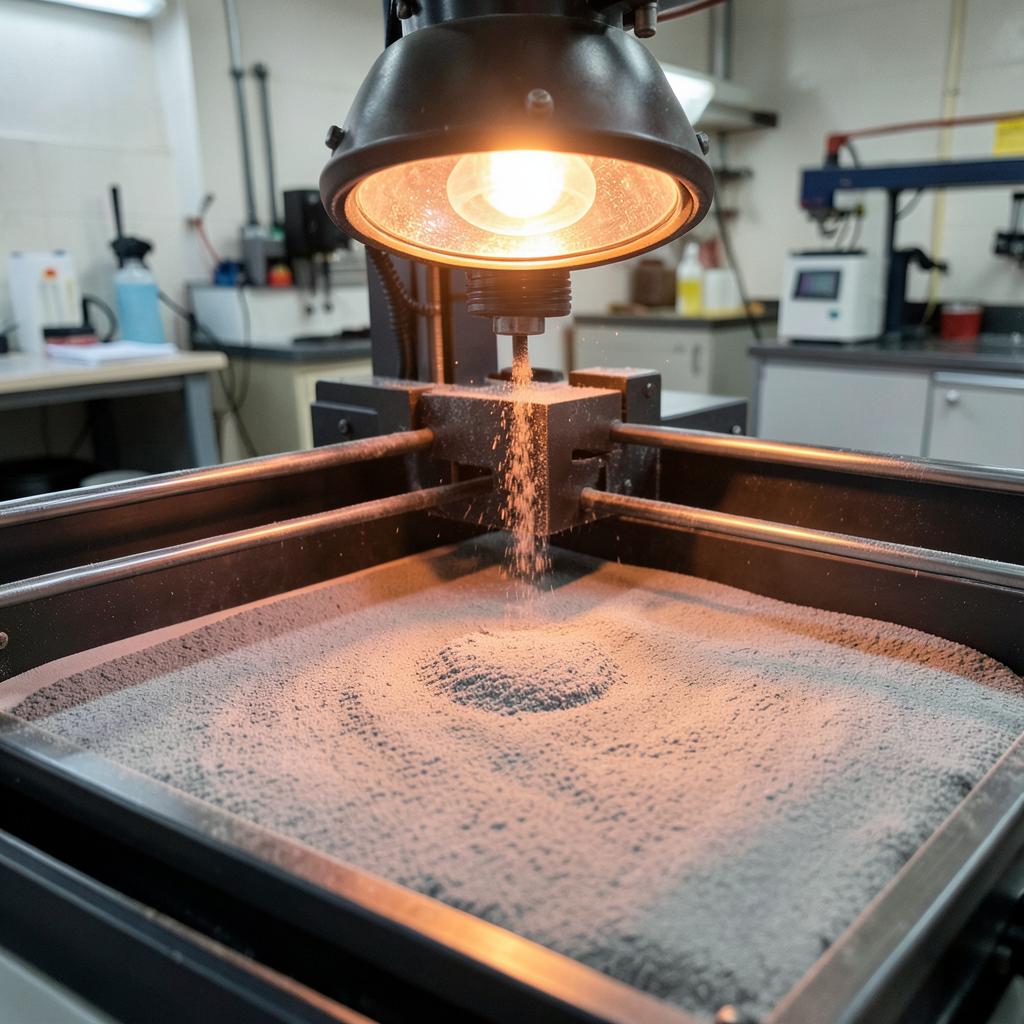
As-built matte
As-built matte is only the starting point.
Vapour smoothing
Vapour smoothing seals the surface for a glossier feel, though it can round off very fine detail, so it's not the right call on every part.
Dyeing
Dyeing takes a part to a solid colour through the surface layer.
Spray painting
Spray painting matches a specific shade or RAL code when a part needs to blend with an existing product or brand palette.
Combined smoothing
Smoothing combines with either dyeing or painting for a sealed, glossy, coloured finish in one step. Tell us the finish on your file upload and we’ll confirm what it adds to cost and lead time before you commit to anything.
Not sure whether your part’s geometry or quantity sits inside these limits? We’ll confirm it before you commit to anything.
Send us your fileMJF 3D Printing Materials We Work With
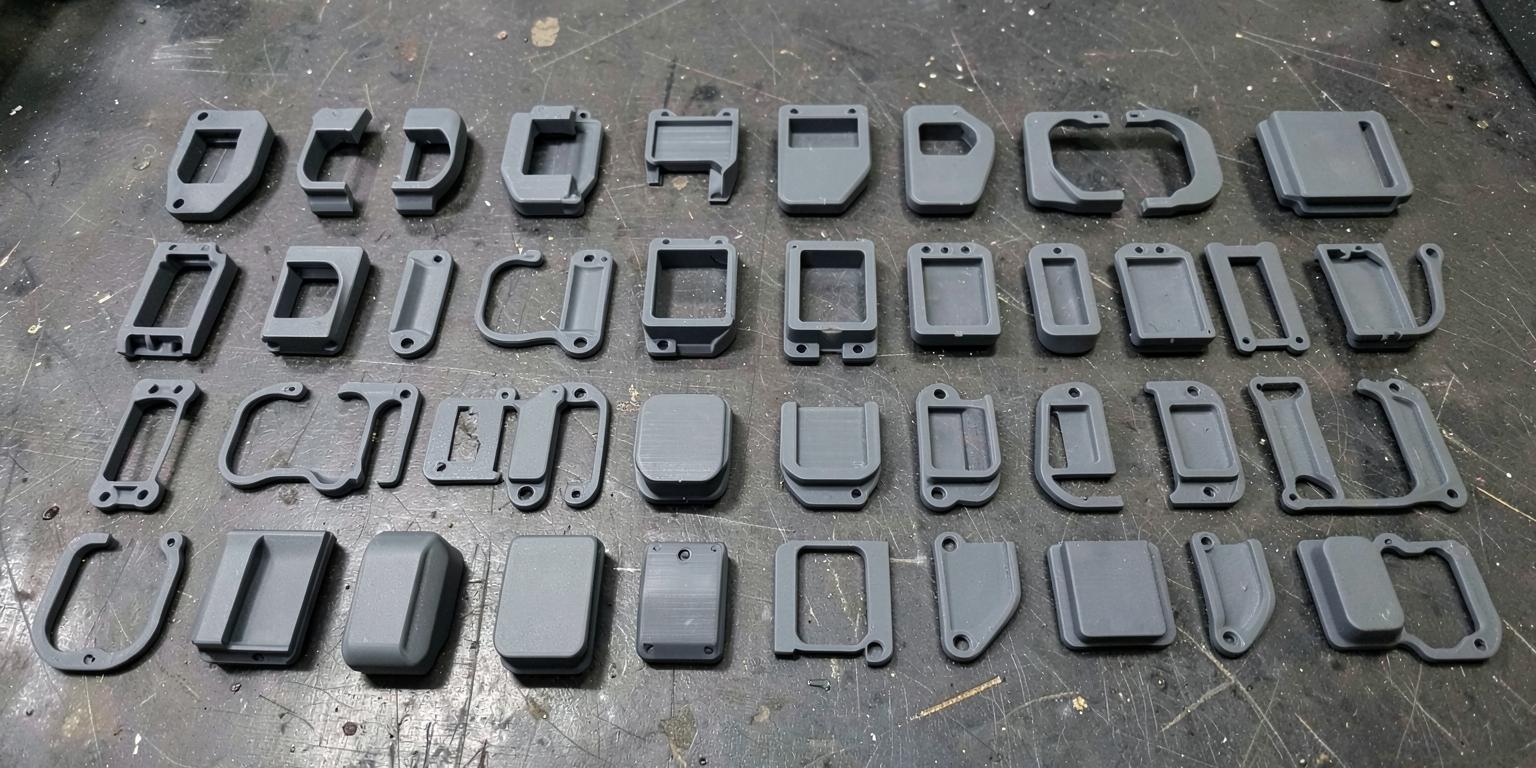
MJF at Quantix 3D Printing runs across 7 materials, spanning rigid and glass bead-filled nylon, a chemical-resistant polypropylene, and 2 flexible elastomers, each suited to a different balance of strength, chemical resistance and flex.
| Material | Typical Use | Max Build Size | Tolerance |
|---|---|---|---|
| PA12 (Nylon 12) | General-purpose functional parts, enclosures, brackets, production-run components | 380 × 284 × 380mm | ±0.1mm/100mm |
| PA12S (Nylon 12 S) | A refined PA12 grade for parts that need a smoother, more consistent surface finish straight off the machine | 380 × 284 × 380mm | ±0.1mm/100mm |
| PA11 (Nylon 11) | Extra impact resistance and flexibility under repeated load, for parts that flex or take knocks | 380 × 284 × 380mm | ±0.1mm/100mm |
| PA12GB (Glass Beads) | Added stiffness and dimensional stability for structural parts that can't afford to flex | 380 × 284 × 380mm | ±0.1mm/100mm |
| PP (Polypropylene) | Chemical resistance and fatigue life, for parts that flex repeatedly or meet solvents standard nylon can't handle | 380 × 284 × 380mm | ±0.1mm/100mm |
| TPU (Thermoplastic Polyurethane) | Flexible, rubber-like parts: gaskets, seals, soft-touch grips | 380 × 284 × 380mm | ±0.1mm/100mm |
| TPA (Thermoplastic Polyamide Elastomer) | A lighter, more chemical-resistant flexible alternative to TPU, for seals and elastomeric parts exposed to oils or fuels | 380 × 284 × 380mm | ±0.1mm/100mm |
The mechanical numbers behind that isotropic strength claim:
| Material | Tensile Strength | Elongation at Break | Tensile Modulus | Impact Strength (notched) | HDT @ 0.45MPa |
|---|---|---|---|---|---|
| PA12 | 48 MPa | 15–20% | 1,800 MPa | 3.5–3.7 kJ/m² | 175°C |
| PA12S | 43–45 MPa | 6–12% | 1,700 MPa | 2.5–3.2 kJ/m² | Not published |
| PA11 | 52 MPa | 40–55% | 1,800 MPa | No-break (ductile) | 185°C |
| PA12GB | 30–31 MPa | 5–9% | 2,900–3,000 MPa | Not published | 170–172°C |
| PP | 30 MPa | 18–20% | 1,600 MPa | 3.0–3.5 kJ/m² | 100°C |
| TPU | 7–9 MPa | 150–280% | 85 MPa | Rated by Shore hardness (88–90A), not impact | n/a (elastomer) |
| TPA | 8–10 MPa | 150–250% | 55–100 MPa | Rated by Shore hardness, not impact | n/a (elastomer) |
Need a fully rigid engineering plastic like ULTEM, or a different nylon process entirely? See our full plastic materials range → for FDM, SLA, SLS and PolyJet, or see all 45+ 3D printing materials → for metal too.
Is MJF the Same as SLS?
No, though both fuse powder materials and their names get used as if they're interchangeable. SLS traces each layer with a laser, point by point; MJF jets a fusing agent across the whole layer and sets it with an infrared pass in 1 go, which is why MJF holds pace with a real production run better than SLS does, and why its part-to-part consistency tends to be tighter across a large batch. SLS still holds its own on a single complex, thin-walled or organic part where MJF's production-speed advantage doesn't matter yet.
If your part could go either way, or you're not sure which one it needs, read the full plastic technology comparison on our plastic 3D printing service →, or send us your file and we'll tell you directly, free, before you're quoted anything.
Where Production-Grade MJF Parts Get Used
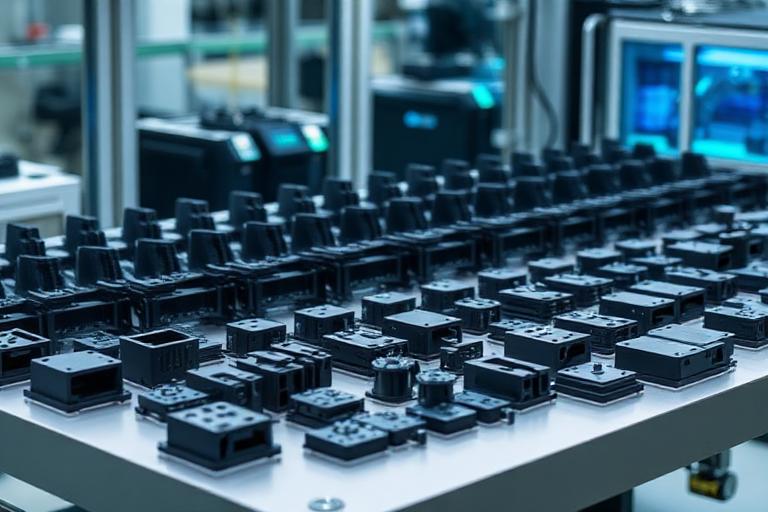
MJF suits applications where a part has to perform the same way from the 1st unit to the 50th, not just once:
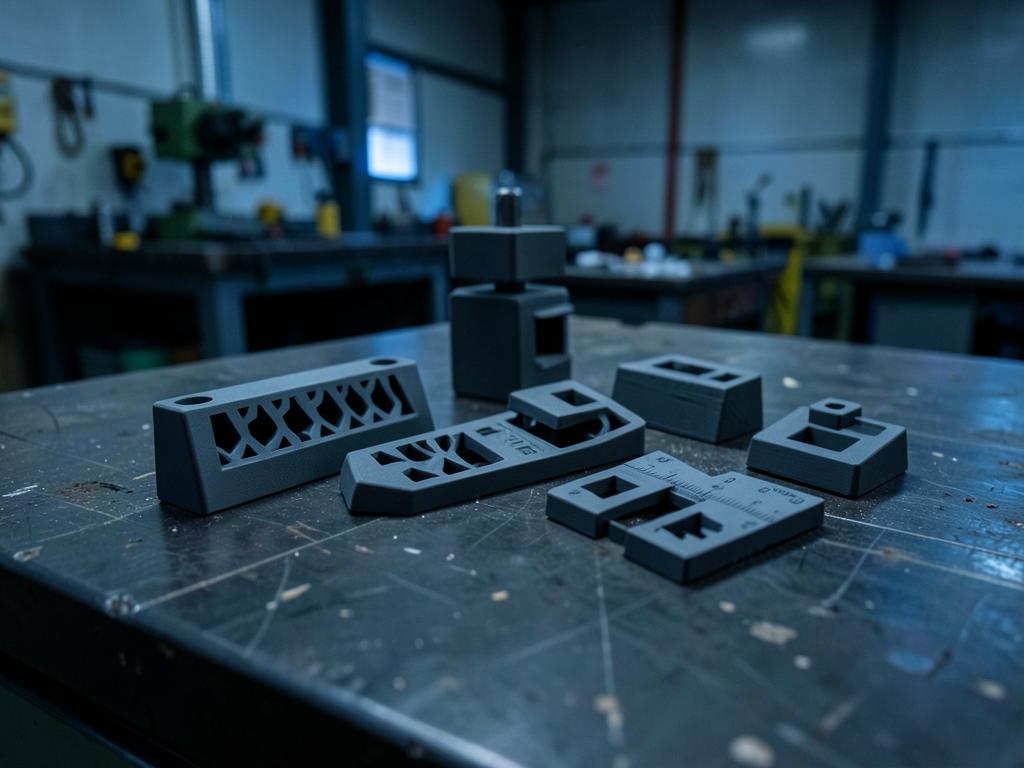
Manufacturing & Engineering:
production jigs, fixtures and functional components ordered in repeat batches, where every unit needs to hold the same tolerance.
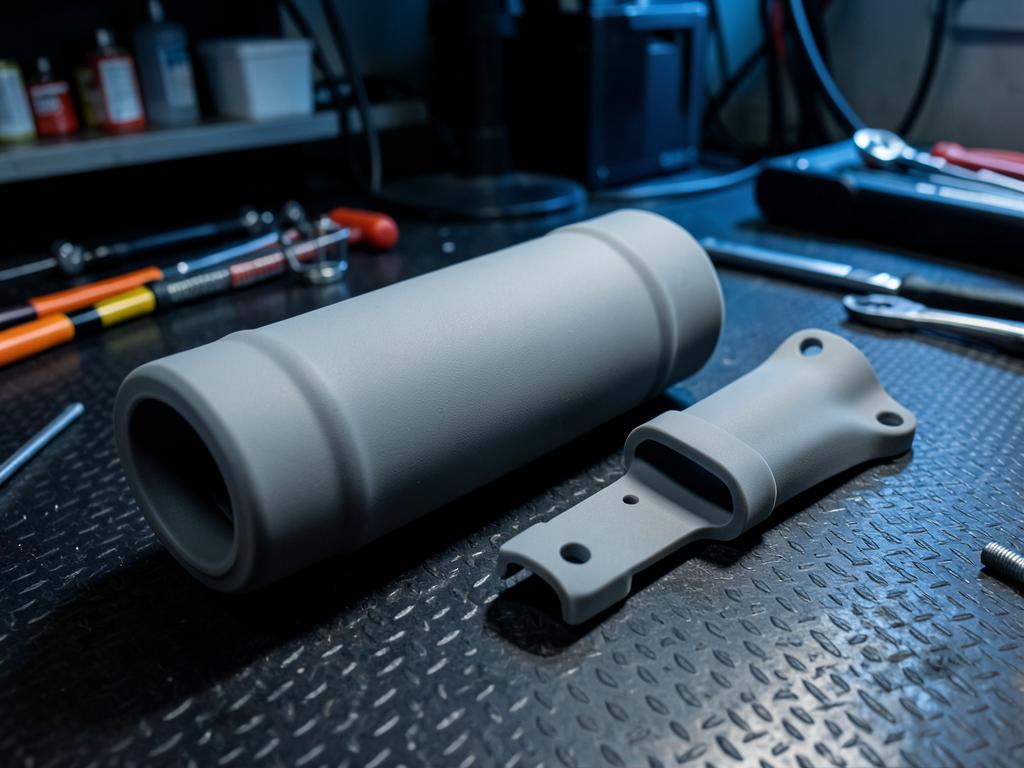
Automotive & Motorsport:
brackets, ducting and housings in nylon or glass bead-filled nylon, produced in the small-to-mid batch sizes a workshop actually needs, without tooling.
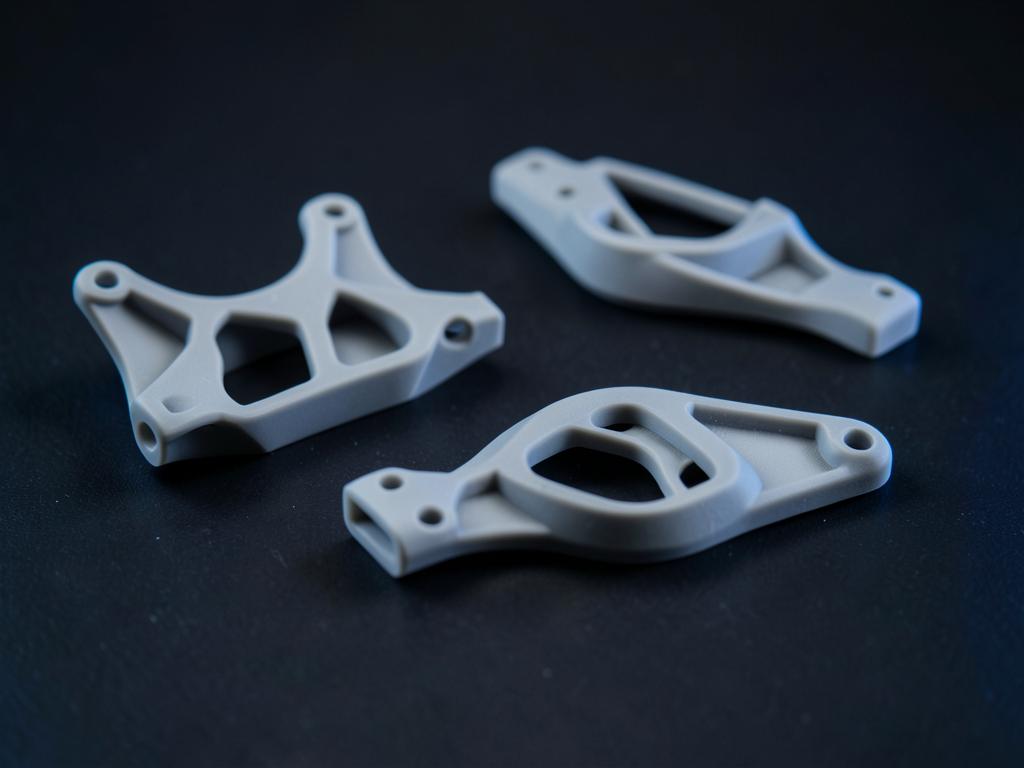
Aerospace & Defence:
complex bracket and housing geometry where part consolidation and consistent mechanical properties matter across a production quantity, not just a single prototype.
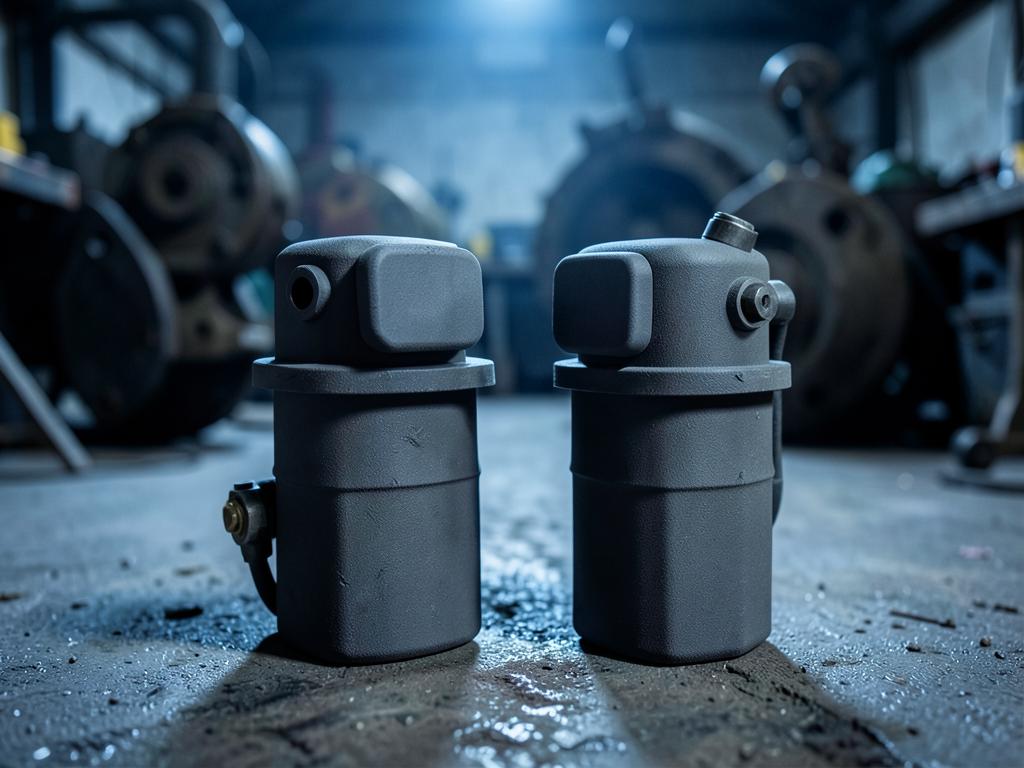
Mining & Resources:
replacement housings and fittings ordered in small production batches for legacy equipment, faster than tooling up with a traditional supplier.
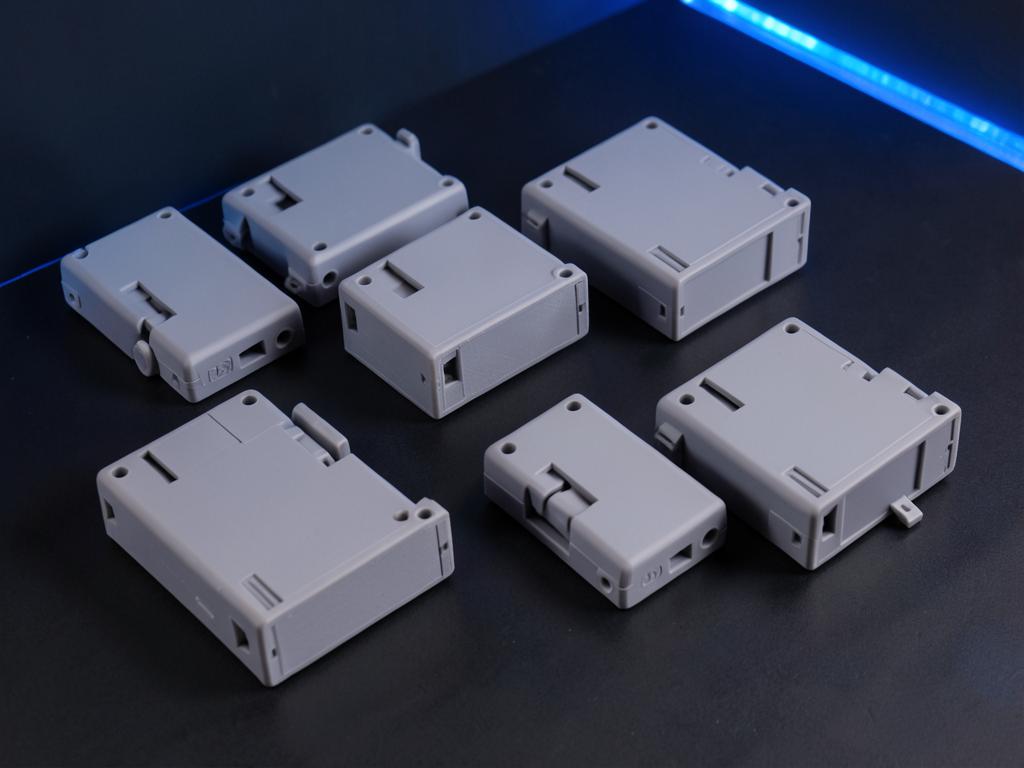
Robotics & Electronics:
enclosures and brackets produced in volume, where MJF's part-to-part consistency keeps every unit within the same fit and tolerance.
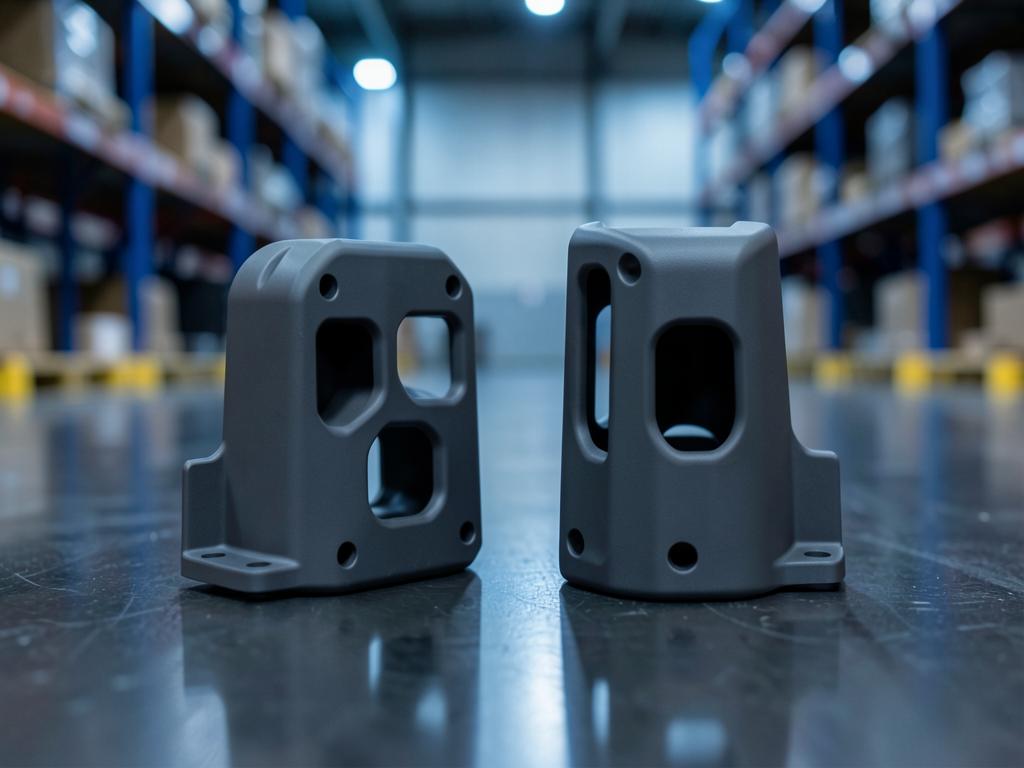
Transport & Logistics:
custom fixtures and equipment housings produced as a repeatable batch, tailored to exact internal clearances.
Whatever your industry, our MJF 3D printing service adapts to your material, tolerance and volume requirements, from a single functional prototype through to a full production run.
What Drives MJF 3D Printing Cost in Australia
3 levers move MJF 3D printing cost in Australia the most, and none of them show up on a competitor's pricing page.
- Nesting and cycle time: Because MJF fuses a whole layer in 1 pass rather than tracing it with a laser, and parts don't need clearance for support structures, more of them pack into a single build and the machine spends less time per part, which is the single biggest lever on per-unit cost as quantity increases.
- Powder economics: A share of unfused powder from each build is reclaimed and blended back into the next one, which keeps material cost more predictable at volume than a process that can't reuse as much of it.
- Material: Standard PA12 sits at the lower end; PA11, PP and PA12S cost a little more; PA12GB (glass bead-filled) costs more again for the added stiffness; and the flexible elastomers, TPU and TPA, sit in their own tier due to lower yield per build.
There's no published rate card, because part size, geometry, material and order quantity all move the number before anything else does, and the gap between a one-off price and a 50-unit price is usually larger on MJF than on any other plastic process, precisely because of how well it scales. Send your file for an online MJF 3D printing quote and get a number that's actually yours.
How an MJF 3D Printing Quote Actually Works
- 1
Send your file:
upload your CAD file and get pricing back for 1 unit or a production quantity, without booking a call first.
- 2
We check it prints well:
an engineer reviews the geometry, flags anything that risks trapped powder in hollow sections, and confirms MJF is the right fit for your part, material and quantity.
- 3
Your part gets built:
fused layer by layer, nested efficiently with other jobs in the same build, in the material locked in at quote stage.
- 4
It ships:
excavated, cleaned, quality-checked and sent anywhere in Australia.
Get a Free MJF Quote
Upload your CAD file through the online form. No account or phone call needed; our team follows up directly if there's anything worth flagging about your design or quantity first.
- 7 MJF materials, rigid nylon through to flexible elastomers
- Free design review before anything prints
- Most MJF jobs ship in 5–6 working days
- No minimum order quantity, ships Australia-wide
MJF 3D Printing: Frequently Asked Questions
What is MJF 3D printing?
MJF (Multi Jet Fusion) is a plastic additive manufacturing process, developed by HP, that jets a fusing agent across an entire layer of engineering powder and sets it with an infrared pass, building a solid, functional part directly from a CAD file. Unfused powder around the part supports it during the build, so no printed support structures are needed.
How is MJF different from SLS?
Both fuse powder materials, but SLS uses a laser to trace each layer point by point, while MJF jets a fusing agent across the whole layer and sets it with an infrared pass in 1 go. That makes MJF faster at holding pace with a real production run and tends to give it tighter part-to-part consistency across a large batch.
Does MJF 3D printing need support structures?
No. The unfused powder surrounding each layer supports the part as it prints, the same mechanical advantage SLS has, though MJF's whole-layer fusing step is what actually sets the 2 processes apart.
What does “isotropic” mean for an MJF part?
It means the part's mechanical strength stays close to uniform in every direction, rather than being noticeably weaker along one axis than another. That matters for a part that gets loaded from more than 1 direction in real use.
What materials can you MJF print?
7 materials: PA12 and PA12S for general-purpose functional parts, PA11 for extra impact resistance and flexibility, PA12GB (glass bead-filled) for added stiffness and dimensional stability, PP for chemical resistance and fatigue life, and TPU or TPA where the part needs to flex.
What finishing options are available for MJF parts?
As-built matte and grainy straight off the machine, or finished further: vapour smoothing for a sealed, glossier surface, dyeing for solid colour through the surface layer, and spray painting to match a specific shade or RAL code. Smoothing can also combine with dyeing or painting in one step. Flag what you need on your file upload.
Is MJF actually cheaper for production runs?
Usually, yes, once quantity climbs. Because a whole layer fuses in 1 pass and parts nest without needing support clearance, per-unit cost drops faster on MJF than on most other plastic processes as order size increases.
Can MJF replace injection moulding for my part?
It depends on volume. MJF skips tooling entirely, so it's typically more economical while a design is still settling or the order quantity doesn't yet justify a mould. Once volume climbs into the thousands, injection moulding usually becomes cheaper per part. Send your file and we'll tell you honestly which side of that line your job sits on.
How much does MJF 3D printing cost?
It depends on part size, geometry, material and order quantity. PA11, PP and PA12S cost a little more than standard PA12, PA12GB (glass bead-filled) more again, and the flexible elastomers (TPU, TPA) sit in their own tier. Upload your file for an exact figure.
How long does an MJF job take?
Most MJF jobs ship in 5–6 working days, though complex geometries or larger quantities can extend that; we'll confirm timing at quote stage.
What's the biggest part you can MJF print?
Up to 380 × 284 × 380mm. Send your file and we'll confirm it fits before you commit to anything.
What's the minimum wall thickness for MJF 3D printing?
0.6mm on a self-supporting wall, 0.7mm if it's an unsupported cantilever, and the smallest freestanding feature that prints reliably intact (a pin, hole or thin rib) is 0.5mm. Parts thicker than 7mm typically get hollowed to save material and weight without losing strength.
Is there an MJF 3D printing service near me?
Quantix 3D Printing runs as an online, Australia-wide service rather than a single local shopfront, so instead of searching for MJF 3D printing near me, you can send your file and have parts shipped to you anywhere in the country.
Is there a minimum order for MJF 3D printing?
No. A one-off functional prototype and a full production batch are quoted and handled the same way, with no lock-in contract.
Do you keep our files and project details private?
Yes. Everything sent to us is treated as confidential, full stop.
How do I get an MJF 3D printing quote?
Upload your CAD file through the online form. No account or phone call needed; our team follows up directly if there's anything worth flagging about your design or quantity first.
Ready to Quote an MJF Part?
Isotropic strength, real production consistency, no tooling to wait on: Quantix 3D Printing is the MJF 3D printing company Australia manufacturers turn to for parts that need to come out the same way every time, running an online, Australia-wide service quoted before you talk to anyone. Upload your file, get your price for 1 unit or a full batch, and we'll flag anything worth knowing about the design first. No minimum batch, nothing locked in, shipped nationwide.