
SLS 3D Printing Australia
No support structures. No design compromises. SLS 3D printing fuses nylon and engineering powder materials into strong, functional parts, straight from your CAD file, in geometry that FDM or SLA simply can't hold up. Quoted online, shipped anywhere in Australia. No tooling. No minimum order. Priced today.
Technical Capabilities
SLS 3D Printing Australia: At a Glance
Process
SLS
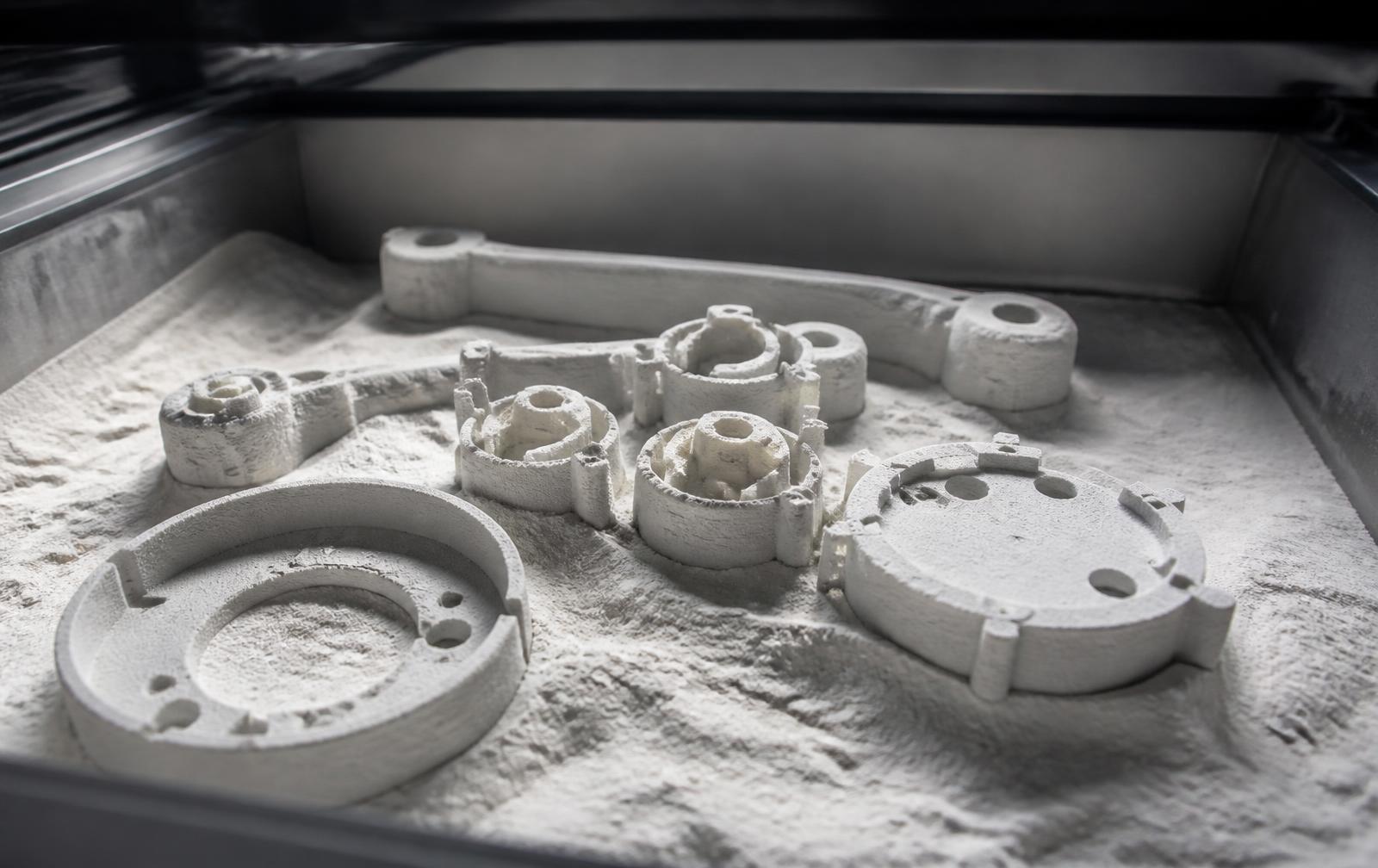
laser fuses engineering powder, layer by layer, with unfused powder supporting the build
Max build envelope
675 × 545 × 366mm
Nylon PA12/PA2200; up to 315 × 240 × 190mm on specialty variants
Tolerance
±0.1mm
per 100mm
Layer thickness
80–120µm
typical
Finest detail
0.3mm
Nylon PA12/PA2200; 0.5mm on specialty variants
Surface finish (as-built)
Matte powder
sandable, dyeable or bead-blastable
Support structures
None required
unfused powder supports every layer
Typical turnaround
5–6 days
working days
What Makes Our SLS 3D Printing Different
Most SLS nylon 3D printing Australia shops describe the no-supports advantage in a sentence and move straight to a quote form. We treat it as the reason this page exists:
No support structures, ever:
unfused powder supports every layer as it prints, so complex internal channels, interlocking assemblies and thin walls come out clean, without support scarring or witness marks to sand off.
Genuinely functional nylon parts:
SLS parts hold real mechanical load, not just the shape of a part, which is why they see use as end-use components and jigs, not just display models.
Ten engineering powder materials, not just one nylon:
standard and impact-grade nylon (PA12, PA11), glass- and carbon-fibre-filled nylon for rigidity, aluminium-filled Alumide for a stiffer, metallic-look finish, flame-retardant nylon for electrical and transport applications, flexible PEBA and TPU elastomers for gaskets and seals, plus polypropylene and food-grade nylon for chemical resistance and food-contact use, all on the same process.
Efficient nesting, lower per-part cost at volume:
because parts don't need clearance for support structures, more of them fit in a single build chamber, and that efficiency passes through to production-run pricing.
A manufacturability check before anything prints:
wall thickness, powder-escape holes for hollow parts, and material fit reviewed by an engineer, not discovered after the part's already built.
Custom SLS 3D printing Australia manufacturers rely on:
a single functional prototype or a full production run, quoted and handled identically, no minimum order quantity.
5–6 working days
on most SLS jobs, depending on part size, geometry and material.
National, not city-bound:
quoted and shipped to every state and territory, with the same material access and process regardless of where you're based.
Private by default:
files and project details stay confidential, with standard purchase-order terms and no lock-in contract.
What Is SLS 3D Printing?
SLS (Selective Laser Sintering) is a plastic additive manufacturing process that builds solid functional parts directly from a CAD file: a laser fuses fine engineering powder together, layer by layer, inside a heated build chamber, with the unfused powder around each part acting as its own support. Nylon is the most common base material, but the same process runs on glass- and carbon-fibre-reinforced nylon, flame-retardant nylon, flexible elastomers, and even non-nylon powders like polypropylene. Because the part never needs printed support structures, SLS can produce complex internal geometry, interlocking assemblies, and thin-walled or organic shapes that would either need extensive supports or simply fail on FDM or SLA, and the resulting parts come out genuinely functional rather than just accurate in shape.
Quantix 3D Printing delivers the selective laser sintering Australia relies on, running SLS 3D printing service jobs across ten engineering powder materials, from standard and impact-grade nylon through to glass- and carbon-fibre-filled, flame-retardant, flexible and polypropylene grades, quoted online and shipped Australia-wide. Comparing it against MJF, our other powder-bed process? See SLS vs MJF on our plastic 3D printing service →
How Selective Laser Sintering Works
- 1
A thin layer of nylon powder
rolls out across the build platform, inside a chamber heated just below the powder's melting point.
- 2
A laser traces the part's cross-section
into that layer, fusing the powder along the path it follows.
- 3
The platform drops slightly
and a new layer of powder is spread on top, with the previous layer's unfused powder left in place.
- 4
The laser repeats the pass,
fusing the new layer to the one underneath, and the cycle continues until the full part exists inside the powder bed, fully surrounded and supported by unfused powder the entire time.
- 5
The build cools, then parts are excavated
from the powder bed and cleaned; no support structures to cut, sand or dissolve, because the powder itself did that job.
That last point is why SLS earns its own page rather than a shared one: the powder bed supporting every layer means design constraints that apply to FDM and SLA (overhang angles, support scarring, orientation planning) mostly don't apply here, which is a genuine mechanical advantage, not a marketing line.
SLS 3D Printing Build Envelope, Tolerance and Finish
| Parameter | Specification |
|---|---|
| Process | Laser fuses engineering powder (nylon and nylon-composite, plus polypropylene), layer by layer, with unfused powder supporting the build |
| Max build envelope | Up to 675 × 545 × 366mm (Nylon PA12/PA2200); smaller for composite-filled, flame-retardant, flexible and specialty variants (up to 315 × 240 × 190mm) |
| Tolerance | ±0.1mm/100mm |
| Layer thickness | 80–120µm (typical) |
| Finest detail | 0.3mm (Nylon PA12/PA2200); 0.5mm on composite, flexible and specialty variants |
| Surface finish (as-built) | Matte, slightly grainy powder finish; sandable, dyeable or bead-blastable on request |
| Support structures | None required: unfused powder supports every layer |
| Typical turnaround | 5–6 working days |
| CAD formats accepted | STL, STEP, IGES (most other native formats convertible on request) |
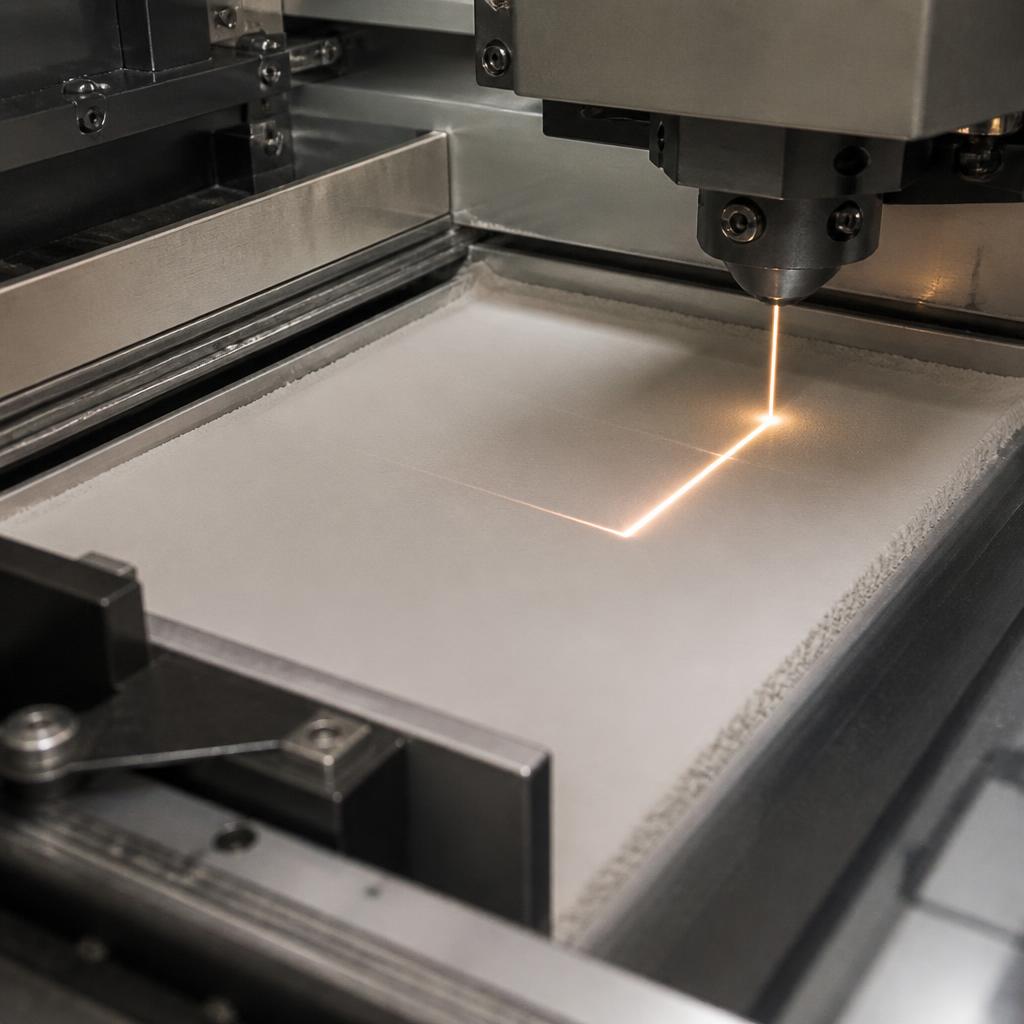
Not sure whether your part's geometry sits inside these limits? Send us your file → and we'll confirm it before you commit to anything.
SLS 3D Printing Materials We Work With
SLS 3D printing isn't a one-material process. Quantix 3D Printing runs across ten engineering powder materials: standard and impact-grade nylon, composite-filled grades for added stiffness, a flame-retardant option, two flexible elastomers, and a non-nylon polypropylene powder for applications nylon simply doesn't suit.
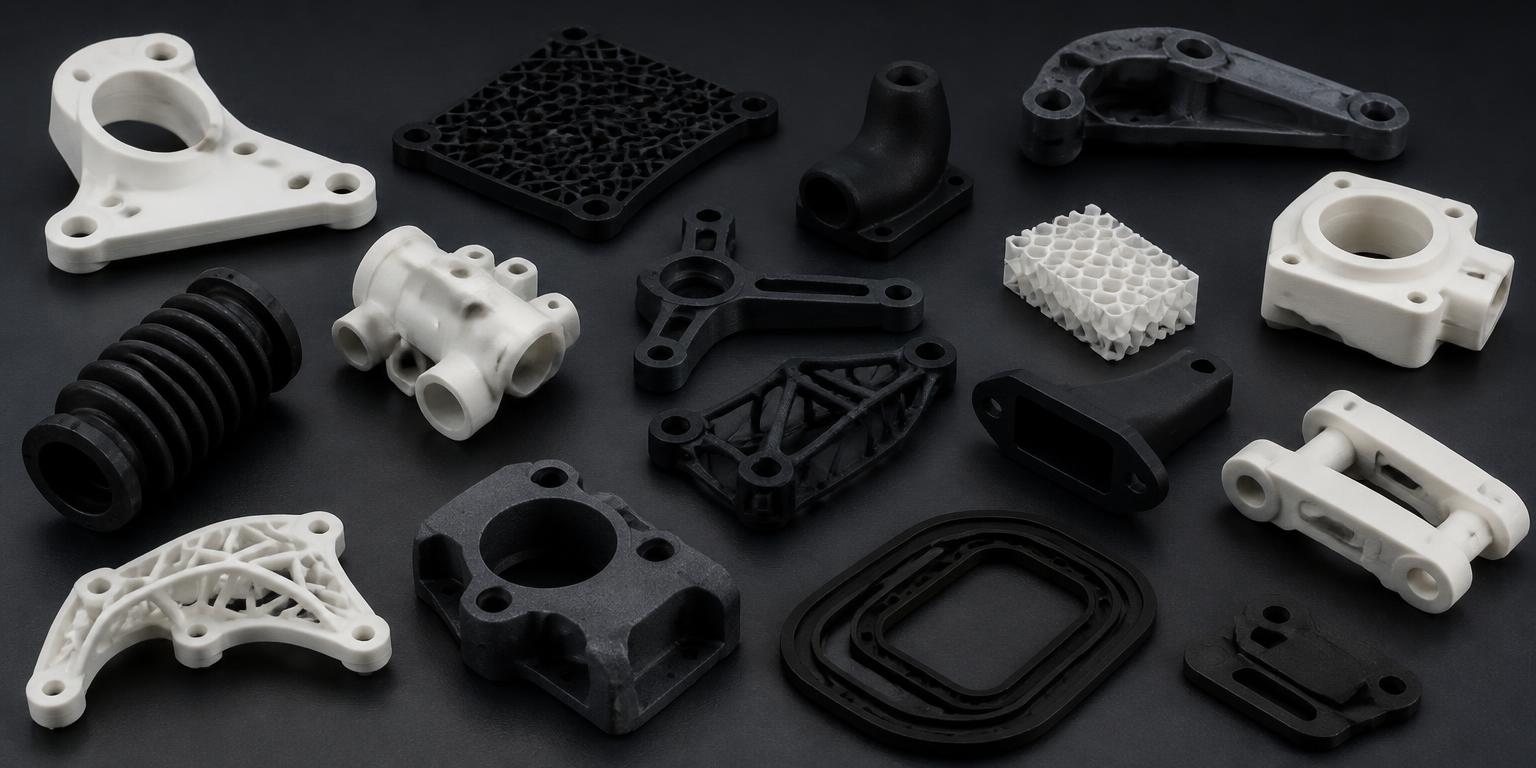
| Material | Typical Use | Max Build Size | Tolerance |
|---|---|---|---|
| Nylon PA12 (PA2200) | General-purpose functional parts, complex geometry, snap-fit assemblies | 675 × 545 × 366mm | ±0.1mm/100mm |
| Nylon PA11 | Tougher, more impact- and flex-resistant than PA12, for parts under repeated flexing | 315 × 240 × 190mm | ±0.1mm/100mm |
| Glass-Filled Nylon PA3200 | Added rigidity and stiffness for structural parts | 315 × 240 × 180mm | ±0.1mm/100mm |
| Carbon-Fibre Filled Nylon | Maximum stiffness-to-weight for structural brackets and jigs | 315 × 240 × 190mm | ±0.1mm/100mm |
| Alumide | Aluminium-filled nylon composite, stiffer feel with a metallic finish | 315 × 240 × 190mm | ±0.1mm/100mm |
| Flame-Retardant Nylon (FR) | Self-extinguishing grade for electrical enclosures and transport applications | 315 × 240 × 190mm | ±0.1mm/100mm |
| Flexible PEBA 2301 | Elastomeric, rubber-like parts: gaskets, seals, living hinges | 315 × 240 × 190mm | ±0.1mm/100mm |
| Flexible TPU | Higher-durometer, abrasion-resistant alternative to PEBA | 315 × 240 × 190mm | ±0.1mm/100mm |
| Polypropylene (PP) | Chemical resistance and fatigue life for living hinges, beyond what any nylon grade offers | 315 × 240 × 190mm | ±0.1mm/100mm |
| Food-Grade Nylon | Formulated for food-contact applications | 315 × 240 × 190mm | ±0.1mm/100mm |
Need a production-grade nylon with tighter part-to-part consistency, or a fully rigid engineering plastic like ULTEM or polycarbonate? See our full plastic materials range → for MJF, FDM, SLA and PolyJet, or see all 45+ 3D printing materials → for metals too.
Is SLS the Same as MJF?
No, though both are nylon powder-bed processes and get confused often. SLS fuses the powder with a laser, one point at a time; MJF spreads a fusing agent across the whole layer and sets it with heat in one pass, which makes MJF faster and gives it tighter part-to-part consistency on production runs. SLS still holds its own on complex, thin-walled or organic geometry, and remains the better fit for a single functional prototype or a small batch where MJF's production-speed advantage doesn't matter yet.
If your part could go either way, or you're not sure which one it needs, read the full plastic technology comparison on our plastic 3D printing service →, or send us your file and we'll tell you directly, free, before you're quoted anything.
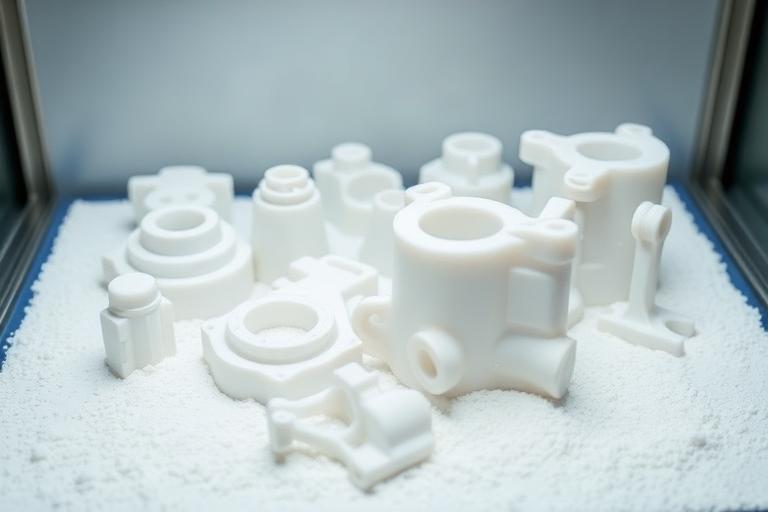
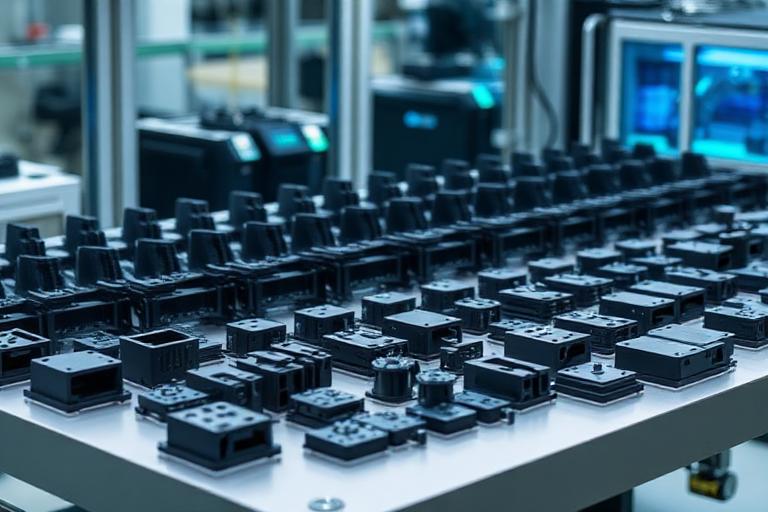
SLS 3D Printing Across Australian Industry
SLS suits applications where complex geometry, functional strength or design freedom from support constraints matter more than production speed alone:
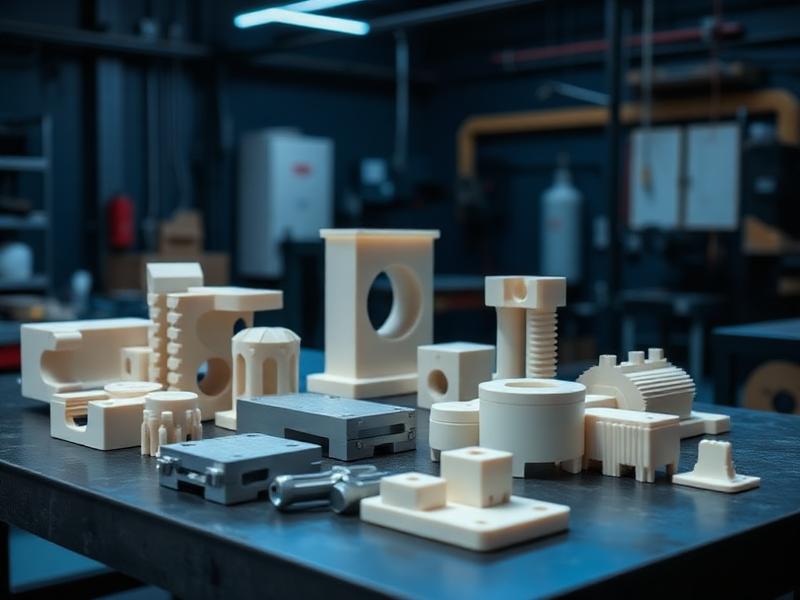
Manufacturing & Engineering:
jigs, fixtures and functional prototypes with internal channels or interlocking features that FDM or SLA can't produce without extensive support removal.
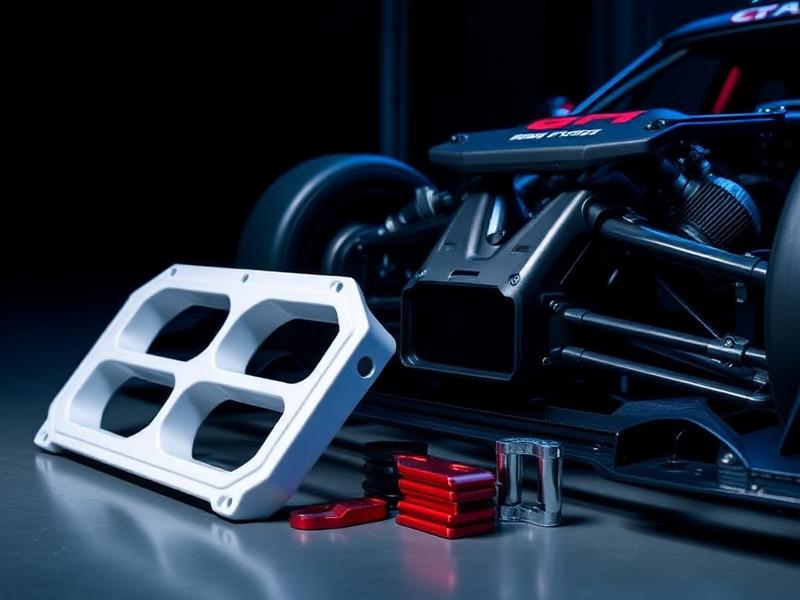
Automotive & Motorsport:
lightweight brackets, ducting and housings in nylon, glass- or carbon-fibre-filled nylon, and flexible PEBA or TPU seals and gaskets for under-bonnet applications.
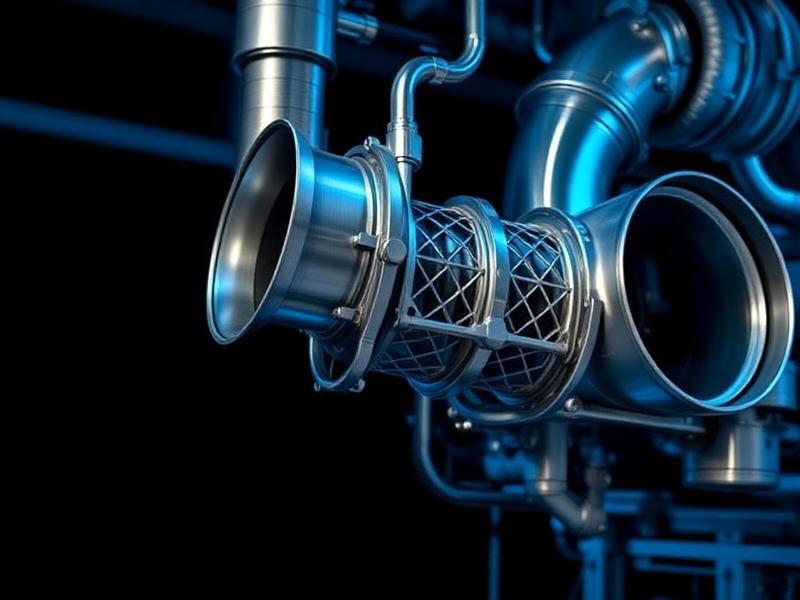
Aerospace & Defence:
complex ducting and bracket geometry where part consolidation reduces assembly count versus a machined or moulded equivalent.
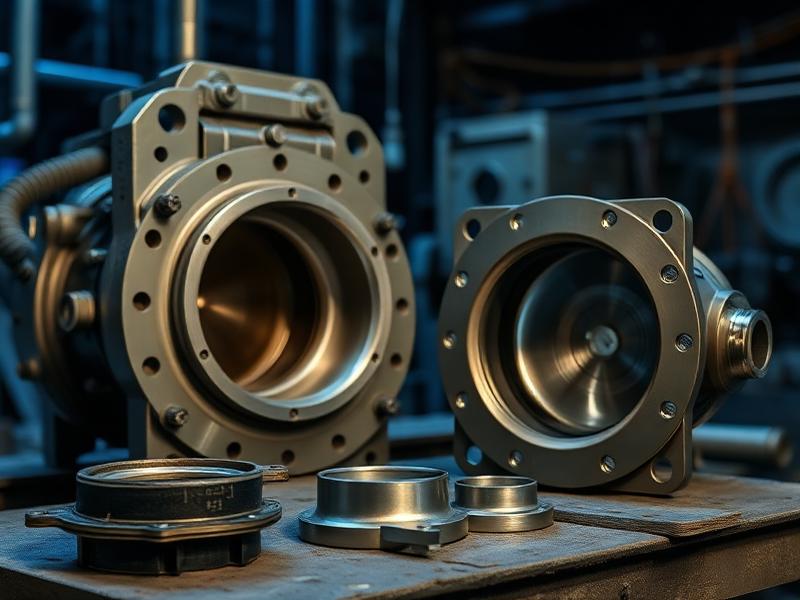
Mining & Resources:
replacement housings and fittings for legacy equipment, produced faster than sourcing an obsolete part through a traditional supplier.
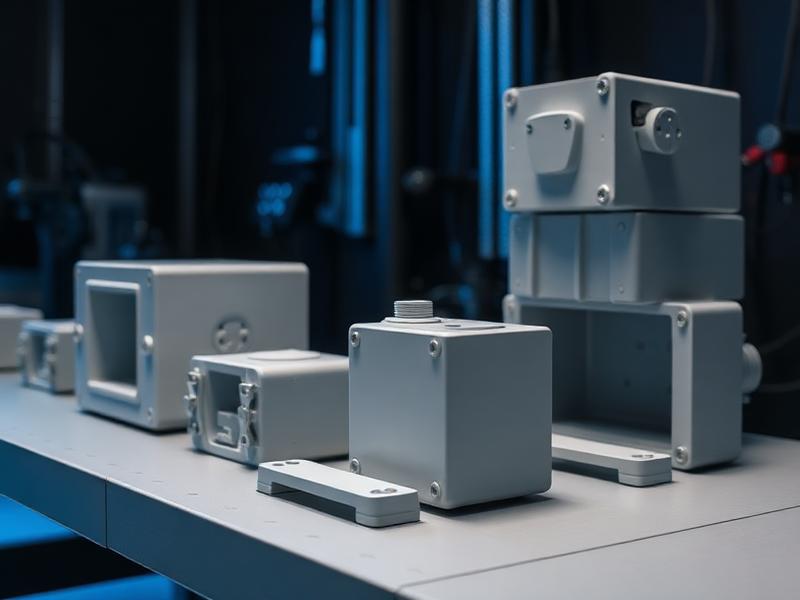
Robotics & Electronics:
precision enclosures and brackets in flame-retardant nylon where electrical safety matters, with fine internal detail that would otherwise need multiple machined parts assembled together.
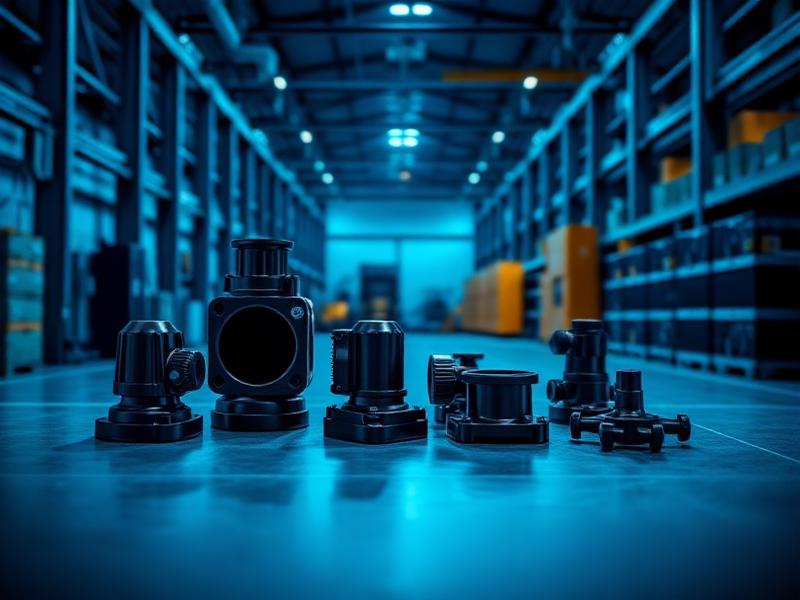
Transport & Logistics:
custom fixtures and equipment housings in chemical-resistant polypropylene or standard nylon, tailored to exact internal clearances.
Whatever your industry, our SLS 3D printing service adapts to your material, tolerance and volume requirements, from a single functional prototype to a full production run.
What Drives SLS 3D Printing Cost in Australia
SLS 3D printing cost Australia comes down to three things most competitors don't explain. First, powder cost and machine time: engineering powder isn't cheap, and the laser has to trace every cross-section of every part in the build. Second, nesting efficiency: because SLS parts don't need clearance for support structures, more of them pack into a single build chamber, which is the single biggest lever on per-part cost at production volume, and one no FDM or SLA job can match. Third, material: standard Nylon PA12 sits at the lower end, glass- and carbon-fibre-filled grades, Alumide and flame-retardant nylon sit above it for the added performance, and the flexible PEBA and TPU elastomers cost more again due to lower yield per build. There's no published rate card, because part size, geometry, material and how efficiently a batch nests all move the number before anything else does. Send your file for an online SLS 3D printing quote and get a number that's actually yours.
From CAD File to Finished SLS Part
- 1
Send your file:
upload your CAD file and get pricing back without booking a call first.
- 2
We check it prints well:
an engineer reviews the geometry, flags anything that risks trapped powder in hollow sections, and confirms SLS is the right fit for your part and material.
- 3
Your part gets built:
fused layer by layer, nested efficiently with other jobs in the same build, in the material locked in at quote stage.
- 4
It ships:
excavated, cleaned, quality-checked and sent anywhere in Australia.
Get a Free SLS Quote
Upload your CAD file through the online form. No account or phone call needed; our team follows up directly if there's anything worth flagging about your design first.
- Ten engineering powder materials, nylon through to elastomers
- Free design review before anything prints
- Most SLS jobs ship in 5–6 working days
- No minimum order quantity, ships Australia-wide
SLS 3D Printing: Frequently Asked Questions
What is SLS 3D printing?
SLS (Selective Laser Sintering) is a plastic additive manufacturing process that fuses fine engineering powder, most commonly nylon or a nylon composite, but also non-nylon powders like polypropylene, with a laser, layer by layer, to build a solid, functional part directly from a CAD file. Unfused powder around the part supports it during the build, so no printed support structures are needed.
Does SLS 3D printing need support structures?
No. The unfused powder surrounding each layer supports the part as it prints, which is why SLS can produce complex internal channels, interlocking assemblies and thin-walled geometry that would need extensive supports on FDM or SLA.
Is SLS the same as MJF?
Not exactly. Both fuse nylon powder, but SLS uses a laser to fuse powder point by point, while MJF spreads a fusing agent across the whole layer and sets it with heat, which makes MJF faster and more consistent for production runs. See our plastic 3D printing service for the full comparison.
What materials can you SLS print?
Ten engineering powder materials: Nylon PA12 (PA2200) for general-purpose functional parts, Nylon PA11 for tougher, more impact-resistant parts, Glass-Filled Nylon PA3200 and Carbon-Fibre Filled Nylon for added rigidity, Alumide for a stiffer, metallic-look finish, Flame-Retardant Nylon for electrical and transport applications, Flexible PEBA 2301 and Flexible TPU for gaskets, seals and rubber-like parts, Polypropylene for chemical resistance, and Food-Grade Nylon for food-contact applications.
Will an SLS part actually hold up under load?
Yes. SLS produces genuinely functional nylon parts with real mechanical strength, which is why they're used as jigs, fixtures and end-use components, not just display models.
How much does SLS 3D printing cost?
It depends on part size, geometry, material and how efficiently your part nests alongside others in a build. Composite-filled and flame-retardant grades sit above standard nylon; the flexible PEBA and TPU elastomers cost more again. Upload your file for an exact figure.
How long does an SLS job take?
Most SLS jobs ship in 5–6 working days, though complex geometries can extend that; we'll confirm timing at quote stage.
What's the biggest part you can SLS print?
Up to 675 × 545 × 366mm in standard Nylon PA12 (PA2200); the composite-filled, flame-retardant, flexible and specialty variants run smaller, up to 315 × 240 × 190mm. Send your file and we'll confirm it fits before you commit to anything.
Is there an SLS 3D printing service near me?
Quantix 3D Printing runs as an online, Australia-wide service rather than a single local shopfront, so instead of searching for SLS 3D printing near me, you can send your file and have parts shipped to you anywhere in the country.
Is there a minimum order for SLS 3D printing?
No. A one-off functional prototype and a full production batch are quoted and handled the same way, with no lock-in contract.
Do you keep our files and project details private?
Yes. Everything sent to us is treated as confidential, full stop.
How do I get an SLS 3D printing quote?
Upload your CAD file through the online form. No account or phone call needed; our team follows up directly if there's anything worth flagging about your design first.
Ready to Quote an SLS Part?
Complex geometry, functional strength, no support structures to fight: Quantix 3D Printing is the SLS 3D printing company Australia turns to, running an online, Australia-wide service quoted before you talk to anyone. Upload your file, get your price, and we'll flag anything worth knowing about the design first. No minimum batch, nothing locked in, shipped nationwide.